Design history · 1930s–1960s

Alexey Brodovitch

The art director who taught a generation of American photographers to astonish him.

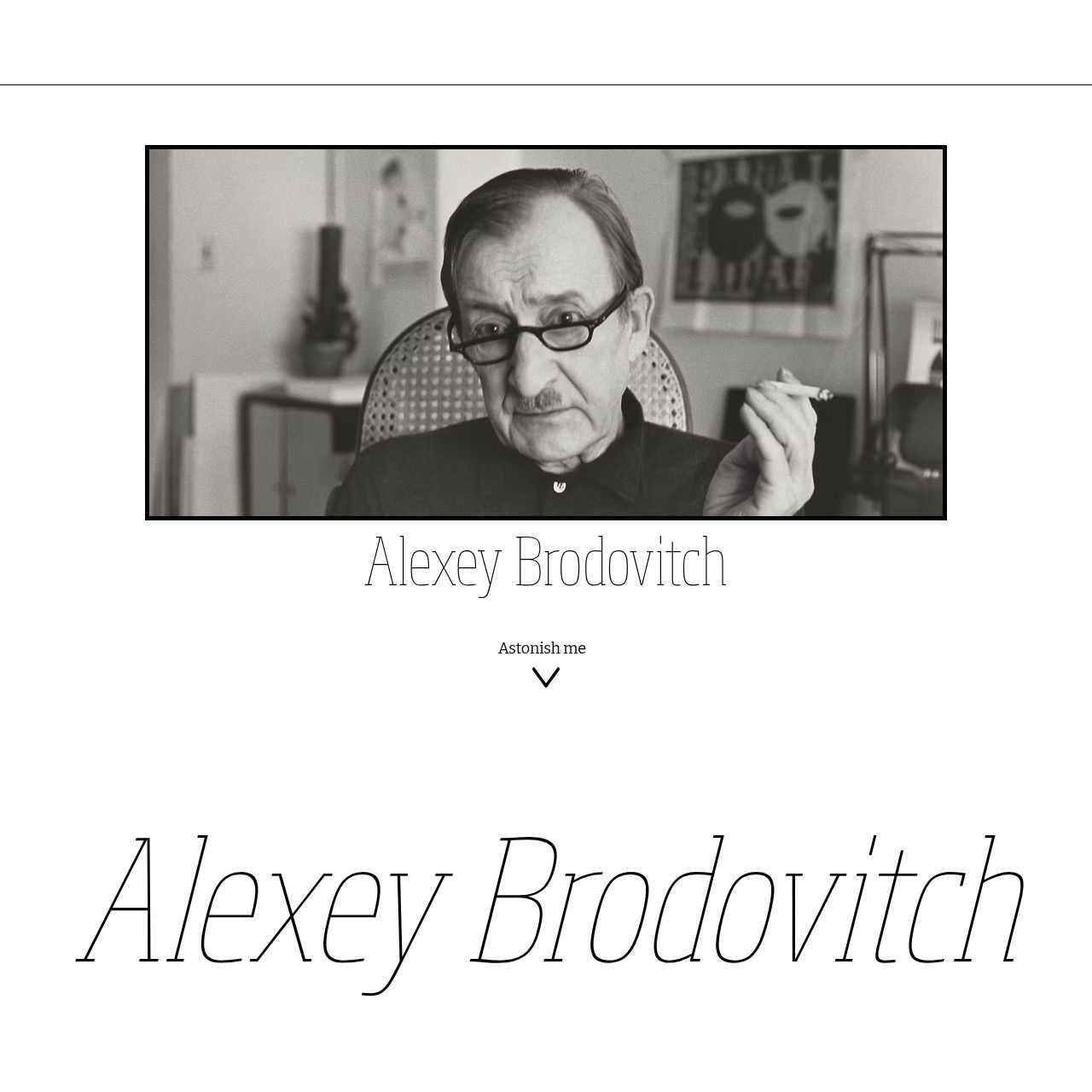
Alexey Brodovitch (1898–1971) was the Russian-born art director of Harper's Bazaar from 1934 to 1958 and the founder of the Design Laboratory in New York. He integrated photography and typography into a single editorial language and mentored Richard Avedon, Irving Penn, Diane Arbus, Hiro and Art Kane — shaping mid-century American visual culture more than almost any other designer of his generation.

Key facts

Born
1 May 1898, Ogolichi, Russian Empire (now Belarus)
Died
15 April 1971, Le Thor, Vaucluse, France
Nationality
Russian-American
Era
American mid-century · Editorial art direction · Photographic modernism
Studios
Harper's Bazaar (art director, 1934–1958) · Portfolio magazine (art director, 1949–1951) · Design Laboratory, New York (1941–1967)
Known for
Harper's Bazaar art direction · Ballet (1945) · Design Laboratory teaching · the Avedon / Penn / Arbus generation of photographers

Biography

Alexey Vyacheslavovich Brodovitch was born in 1898 in Ogolichi, then part of the Russian Empire. He served in the Imperial Russian Army during the First World War and the subsequent civil war, fought on the White side, and eventually made his way out of Russia via Constantinople to Paris.

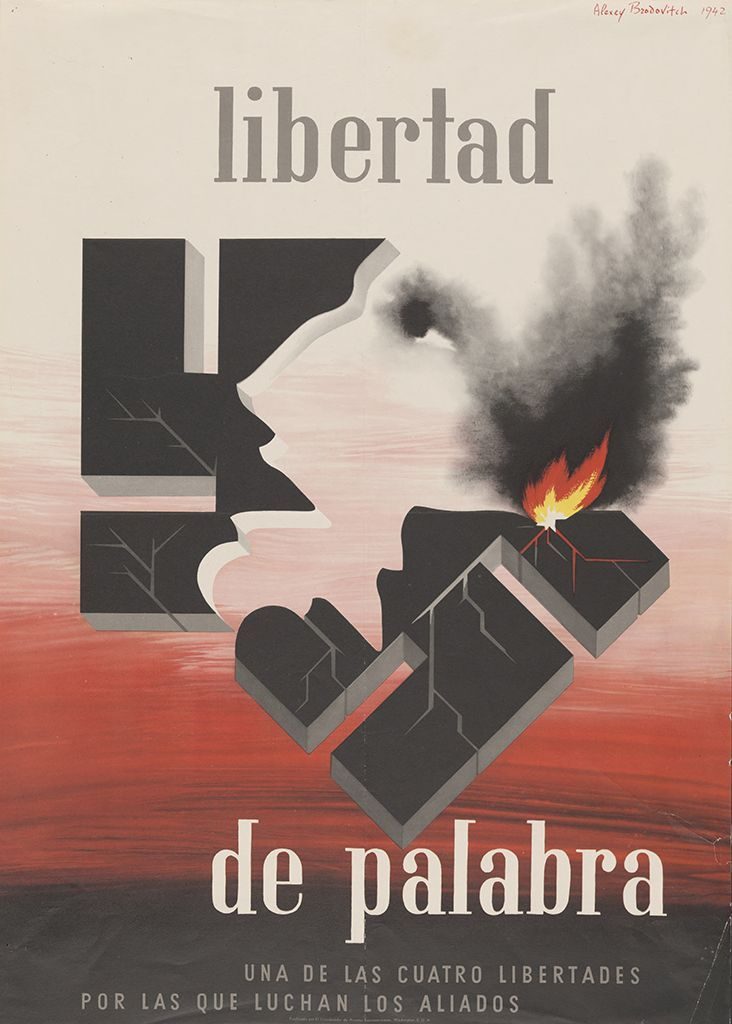
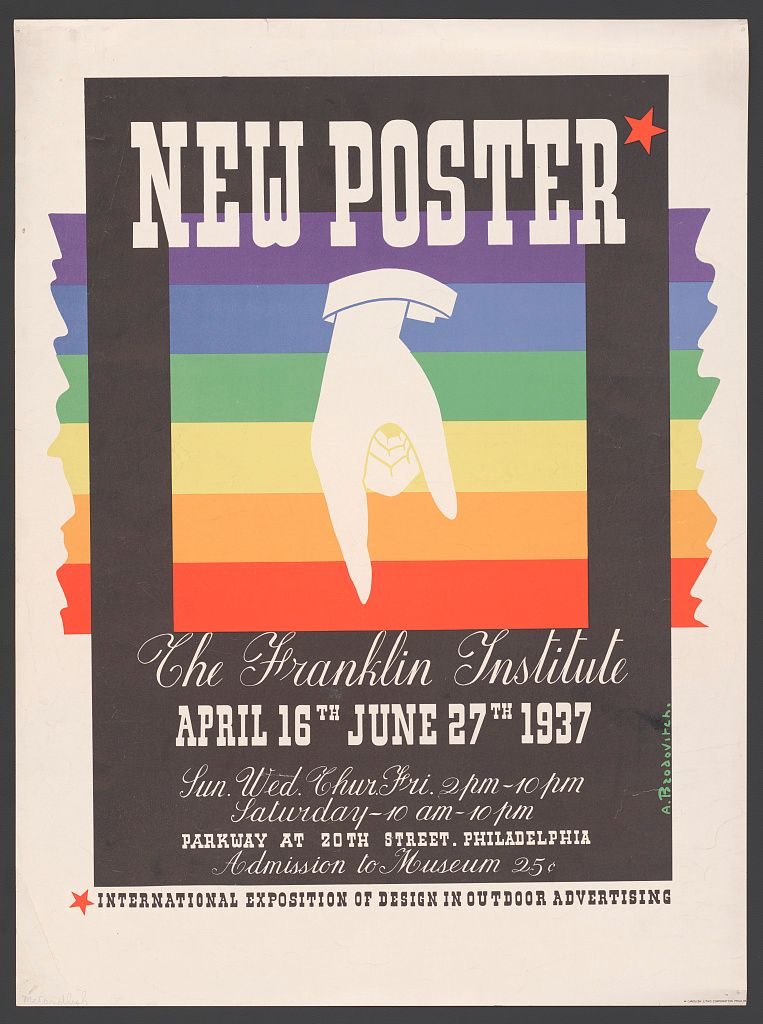
In Paris through the 1920s he moved through the graphic arts — painting sets for the Ballets Russes, designing posters, and winning a poster competition for the Bal Banal in 1924 in which Picasso also entered. He ran the studio at the Parisian department store Trois Quartiers and absorbed the European avant-garde around him — Cassandre’s posters, the Bauhaus émigrés, the Constructivists he already knew from home.

In 1930 he moved to Philadelphia to run the advertising-design programme at the Pennsylvania Museum School of Industrial Art. In 1934 Carmel Snow hired him as art director of Harper’s Bazaar. He held the post until 1958 — twenty-four years that remade American magazine design.

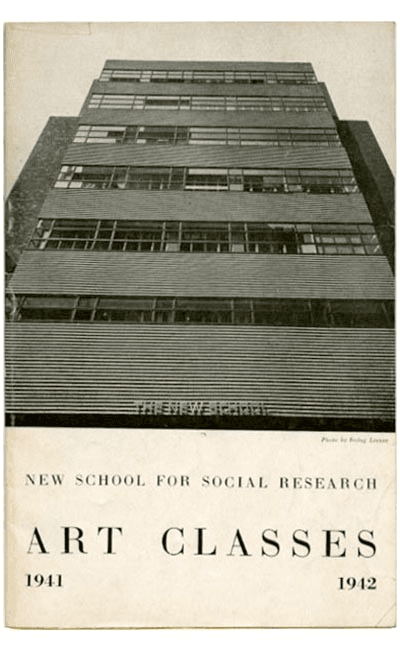
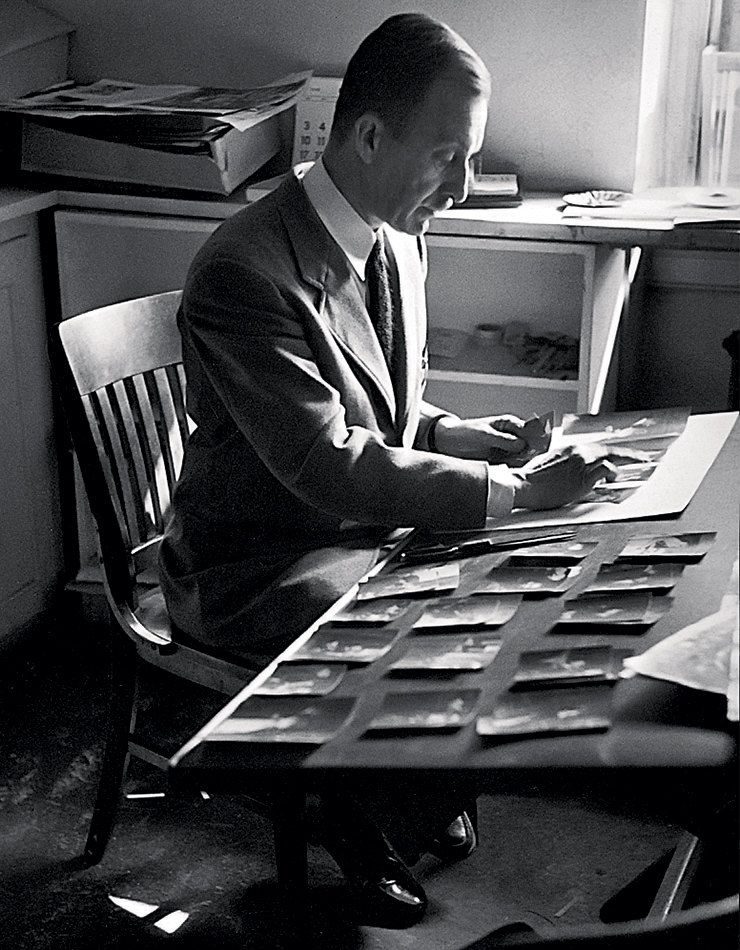
From 1941 he ran the Design Laboratory, first at the New School for Social Research and then independently. It was never a conventional course. Students brought work; Brodovitch tore it up. Those who survived included Richard Avedon, Irving Penn, Diane Arbus, Hiro and Art Kane.

His later years were difficult. Ill health, alcoholism and two studio fires that destroyed most of his personal archive pushed him into retreat. He returned to France in the mid-1960s and died in Le Thor in 1971, largely in obscurity.

Design philosophy

Brodovitch’s position was that the editorial spread — not the single page — is the unit of design, and that typography and photography have to be composed as a single image.

“Astonish me!” — Alexey Brodovitch, to students and contributors

The two-word brief became legendary because it was genuine. He refused to tell photographers what he wanted. He expected them to bring him something he hadn’t seen before, and he edited ruthlessly when they didn’t.

His working principle was that white space is the designer’s best friend. A Brodovitch spread is never full. Type sits against deliberately empty paper. An image bleeds across the gutter so that the fold itself becomes part of the composition. Type is treated photographically — its weight and placement answering the weight and placement of the image across the spread.

He was not a theorist. He left no textbook, no manifesto, almost no writing. What he left was the practice and the students who carried it.

Key works

Harper’s Bazaar art direction (1934–1958) — the role that built the reputation. Twenty-four years of monthly issues under Carmel Snow, with Brodovitch commissioning and editing Cartier-Bresson, Man Ray, Bill Brandt, Avedon, Penn and dozens more. The integrated spread — photograph, headline and body treated as one composition — is his permanent contribution to editorial craft.

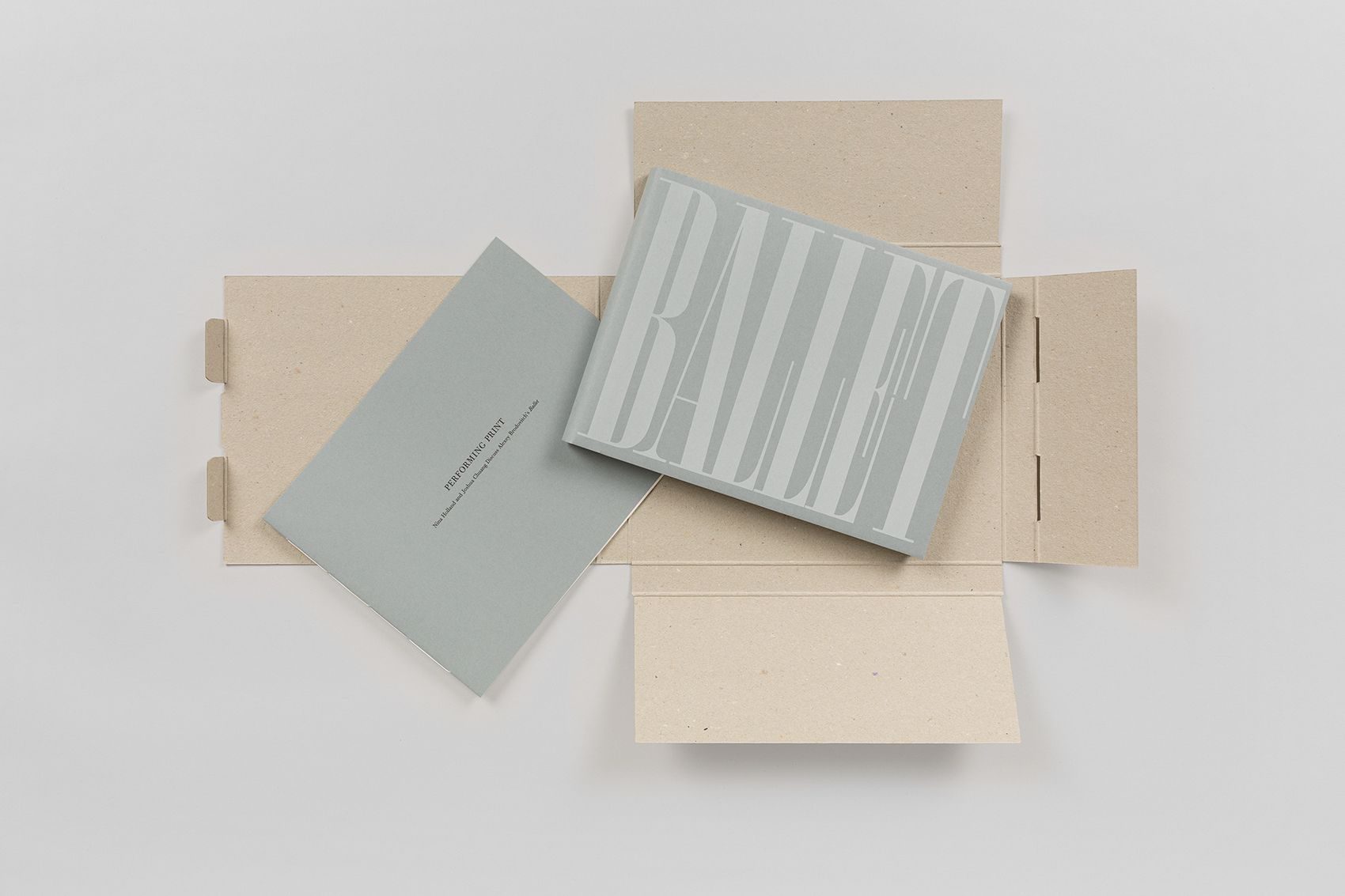
Ballet (1945) — Brodovitch’s own photo book, printed in photogravure in a small edition by J. J. Augustin. Motion-blurred, grainy, deliberately imperfect images of the Ballets Russes taken from the wings during the 1930s. Ignored on publication, now recognised as one of the foundational photo books of the century.

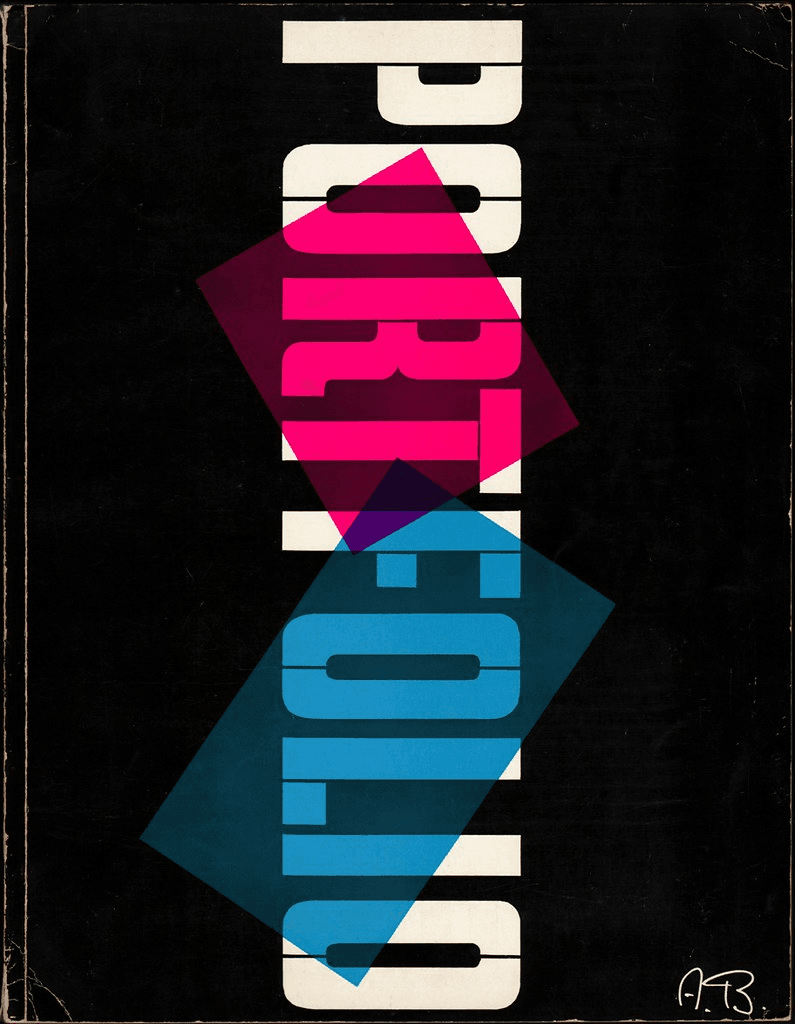
Portfolio magazine (1949–1951) — three issues only, co-founded with Frank Zachary. Large format, no advertising, high-quality printing with fold-outs, die-cuts and tipped-in materials. The magazine went bankrupt but every subsequent art-publication designer has studied it.

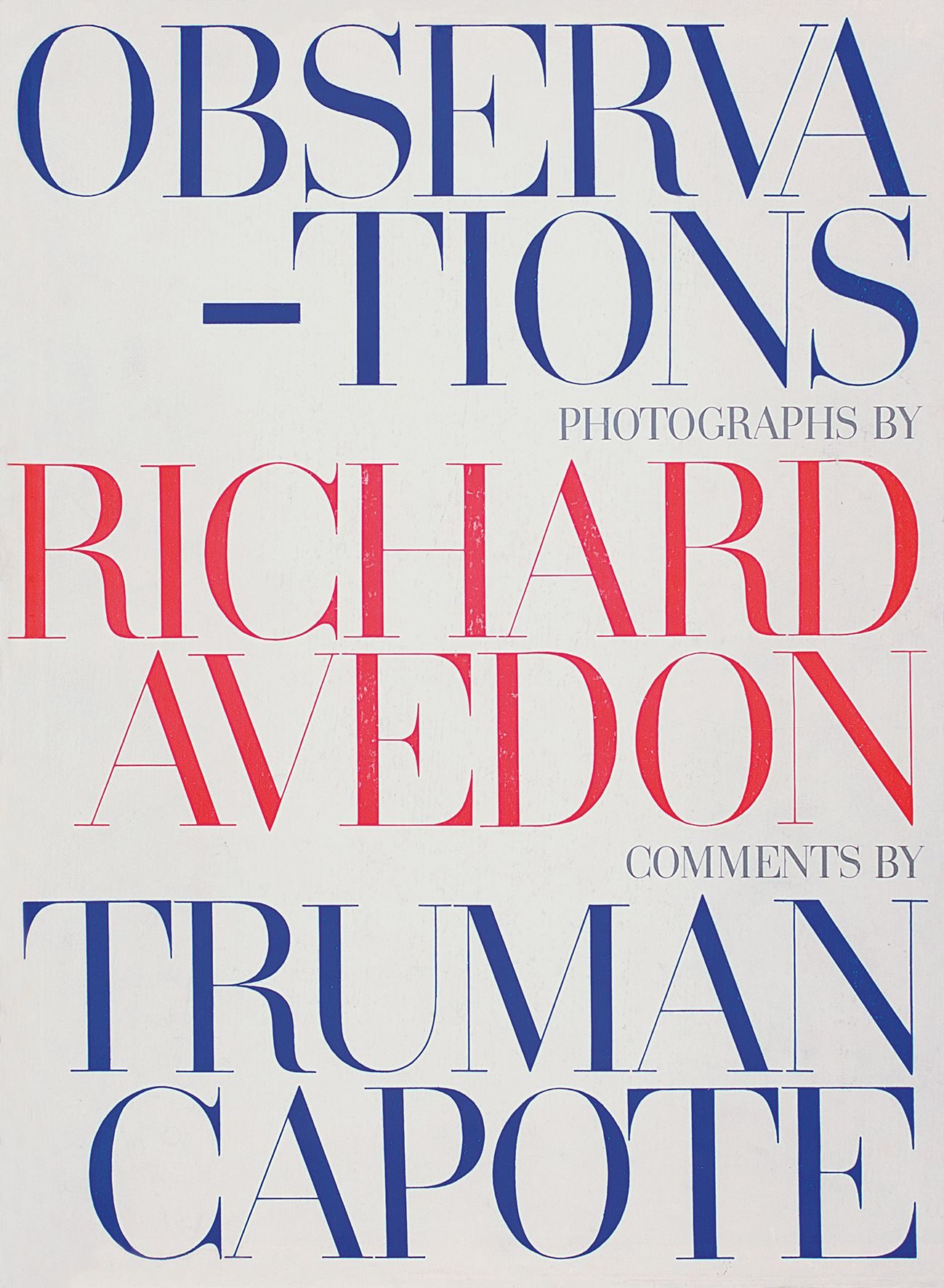
Observations (1959) — book with photographs by Richard Avedon and text by Truman Capote, designed by Brodovitch. The spread discipline from Bazaar applied to the book page — images scaled, cropped and paired against type with complete confidence.

The Design Laboratory (1941–1967) — arguably his most important work. Not an artefact but a teaching programme. The list of its students is effectively a list of mid-century American photography and design.

Iconic works

Harper's Bazaar art direction, 1934/1958

Harper's Bazaar art direction

1934/1958

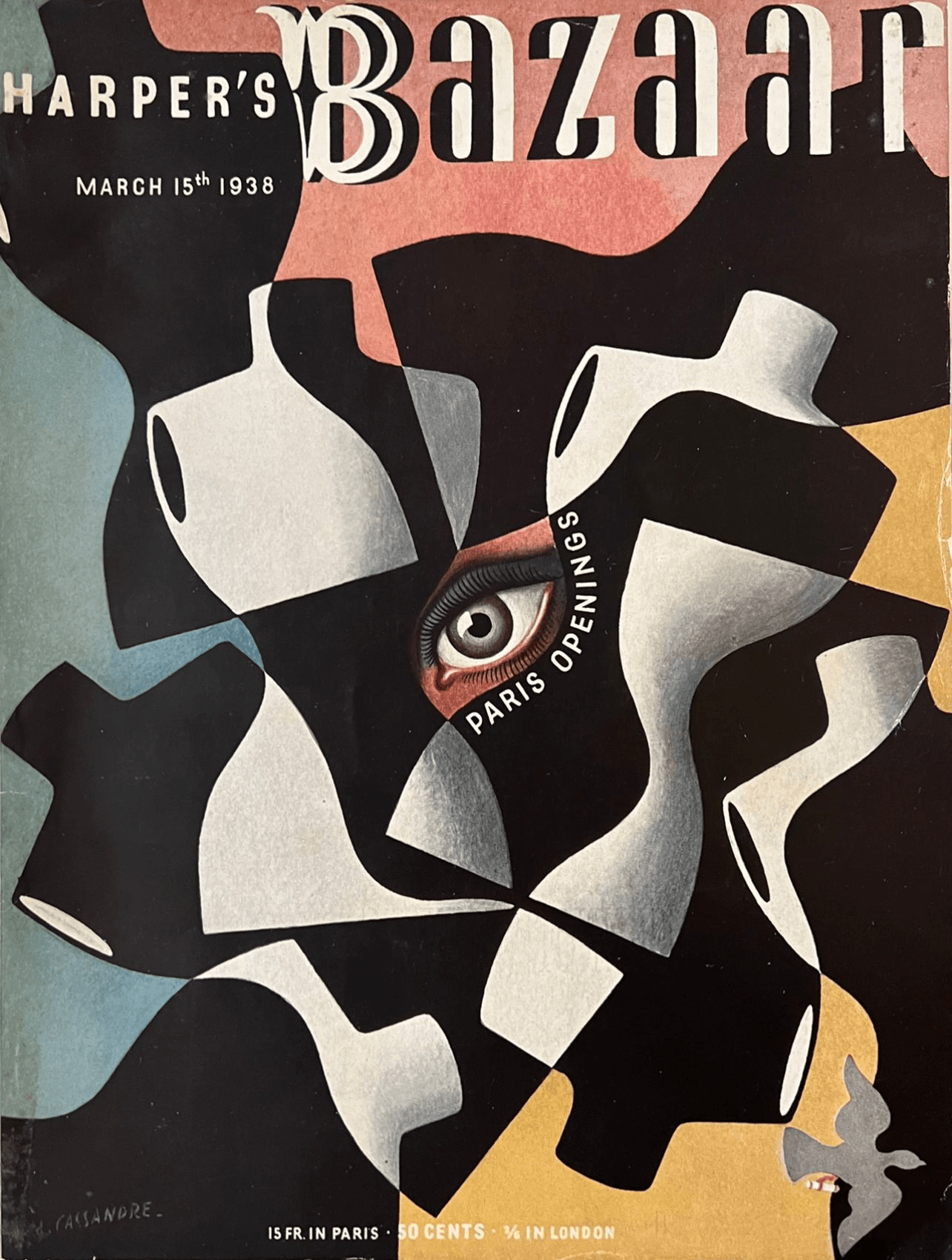
Twenty-four years as art director of Harper's Bazaar under editor Carmel Snow, from 1934 to 1958. Brodovitch commissioned work from Henri Cartier-Bresson, Man Ray, Bill Brandt, Richard Avedon and Irving Penn, treating each spread as a single composed image rather than a container for separate elements. Issues from this period are held in research collections at institutions including MoMA and the Cooper Hewitt Smithsonian Design Museum in New York.
Harper's Bazaar art direction (1934/1958). · March 15, 1938 Harper's Bazaar cover by A.M. Cassandre (commissioned under Brodovitch's art direction) — surrealist design with floating eye motif, reflecting Brodovitch's experimental editorial vision. · Museum editorial
Ballet, 1945

Ballet

1945

Brodovitch's own photo essay on ballet rehearsals, shot during the 1930s tours of the Ballets Russes de Monte Carlo using a Contax 35mm camera without flash. Published in 1945 by J. J. Augustin in New York in a small edition using photogravure printing; controversial on publication for its motion blur and grain. A facsimile edition was published by Errata Editions in 2011; original copies are held at MoMA and the Art Institute of Chicago.
Ballet (1945). · 2024 Little Steidl facsimile reissue; reproduction of 1945 original with grey French-wrap dustjacket, white-printed BALLET title, designed by Brodovitch to mirror original · Museum editorial
Portfolio magazine, 1949/1951

Portfolio magazine

1949/1951

Three issues only, co-founded with Frank Zachary and published by Zebra Press. A large-format journal of the graphic arts, printed with fold-outs, die-cuts and tipped-in materials and carrying no advertising. Production costs closed the magazine after three issues, but its design has been studied by subsequent art-publication designers and editors.
Portfolio magazine (1949/1951). · Portfolio Vol. 1, No. 1 (Winter 1950) cover, designed by Alexey Brodovitch. First issue of the legendary three-part series. · Museum editorial
Observations, 1959

Observations

1959

Designed by Brodovitch with photographs by Richard Avedon and text by Truman Capote, published by Simon and Schuster in New York in 1959. Avedon's photographs are portraits of public figures from the arts, politics and entertainment; Brodovitch's layouts used bleed images, asymmetric cropping and deliberate white space, applying the spread discipline from Harper's Bazaar directly to the book page. MoMA and the Art Institute of Chicago hold copies.
Observations (1959). · Fonts in Use (specialist typography archive); shows Brodovitch's slipcase design with red, blue, and grey Didot lettering on white ground—the definitive typographic reference. · Museum editorial
Design Laboratory teaching programme, 1941/1967

Design Laboratory teaching programme

1941/1967

The teaching workshop Brodovitch ran from 1941, first at the New School for Social Research in New York and later as an independent programme. Students brought existing work for intensive critique rather than instruction in technique; Brodovitch's method was to demand work he had not seen before. Alumni include Richard Avedon, Irving Penn, Diane Arbus, Hiro and Art Kane.
Design Laboratory teaching programme (1941/1967). · 1941-1942 New School for Social Research Art Classes catalog cover (66KB). Direct institutional documentation of the Design Laboratory programme. · Museum editorial

Influence & legacy

Brodovitch’s influence runs through American editorial design from the late 1930s onward. Every magazine art director after him who treats the spread as a composition rather than a container — from Henry Wolf through Fabien Baron to the contemporary generation — is working in a tradition he essentially invented in its modern form.

His reach through his students is wider still. Richard Avedon and Irving Penn reshaped fashion photography. Diane Arbus reshaped documentary. Hiro and Art Kane reshaped editorial. The Harper’s Bazaar commissioning work turned European émigré photographers — Cartier-Bresson, Man Ray, Brassaï — into American editorial staples.

He was awarded the AIGA Medal in 1972, the year after his death, and posthumously inducted into the Art Directors Club Hall of Fame. MoMA and the Cooper Hewitt hold examples of his magazine and book work. The definitive monograph in English remains Kerry William Purcell’s 2002 Phaidon study.

Learn at TGDS

Brodovitch is the background to how we teach editorial layout and the relationship between image and type. If his work interests you, the most direct next steps are:

Courses

Further reading

Books

  • Kerry William Purcell, Alexey Brodovitch (Phaidon Press, 2002) — the definitive English-language monograph.
  • Alexey Brodovitch, Ballet (J. J. Augustin, 1945; Errata Editions facsimile, 2011).
  • Richard Avedon & Truman Capote, Observations, designed by Alexey Brodovitch (Simon & Schuster, 1959).
  • Andy Grundberg, Brodovitch (Harry N. Abrams, 1989) — the earlier standard monograph, from the Masters of American Design series.
  • Portfolio: The Annual of the Graphic Arts, issues 1–3 (Zebra Press, 1949–1951) — original run; facsimile reissues circulate.

Get Started.

You can enrol any day of the year. We are online and study is self-paced, there is no pressure. Enrol when you are ready to start, from anywhere in the world. If you would like to chat or email, feel free to get in touch.

Brochures, Phone Calls & Questions

You can download a free brochure, book a phone call with one of our course advisors, or simply ask a question.

Other ways to get in touch

Australia 1300 655 485

International +61 1300 655 485

Ask Anything info@thegraphicdesignschool.com

Get a quote accounts@thegraphicdesignschool.com

Acknowledgement of Country
The Graphic Design School acknowledges the Traditional Custodians of Country throughout Australia and their continued spiritual connection to land.
We pay respect to Elders past, present and emerging.
Always was, always will be.
RTO Provider № 91706