Design history · 1940s–1970

Emil Ruder

The Basel typography teacher whose 1967 textbook still sets the terms for systematic typographic practice.

Emil Ruder (1914–1970) is the Swiss typographer who built the typography department at the Allgemeine Gewerbeschule Basel and wrote Typographie (1967) — one of the three canonical Swiss-school textbooks. Alongside Armin Hofmann he made the Basel School of Design internationally influential, and his insistence that typography is a systematic craft (not decoration) still shapes professional practice.

Key facts

Born
20 March 1914, Zürich, Switzerland
Died
13 March 1970, Basel, Switzerland
Nationality
Swiss
Era
Swiss Style · Basel School · Systematic typography
Studios
Allgemeine Gewerbeschule Basel (typography department head, 1947–1970) · Typografische Monatsblätter (editor)
Known for
Typographie / Typography (1967 textbook) · Basel typography pedagogy · Introducing Univers to Swiss teaching (1957)

Biography

Emil Ruder was born in Zürich in 1914. He apprenticed as a compositor between 1929 and 1933 — a hot-metal training that grounded his subsequent thinking in the physical constraints of setting type. Through the 1930s he worked in Swiss and Paris print shops while studying at the Kunstgewerbeschule Zürich under Alfred Willimann.

In 1942 he moved to Basel and in 1947 he joined the Allgemeine Gewerbeschule to head the typography department — a role he would hold for twenty-three years until his death. His teaching partner was Armin Hofmann, who joined the graphic-design faculty the same year; together they built what became known internationally as the Basel School of Design.

When Adrian Frutiger released Univers in 1957, Ruder immediately incorporated it into the Basel curriculum — the first school to teach type as a numerical weight-and-width matrix rather than a list of named fonts. Throughout the 1960s he edited issues of Typografische Monatsblätter ™, the Swiss typography journal, using it as a publishing platform for his essays on legibility, rhythm and systematic typographic structure.

He completed Typographie: A Manual of Design in 1967, three years before his death. He died in Basel in 1970, aged fifty-five.

Design philosophy

Ruder’s position was that typography is functional before it is expressive — the typographer’s first duty is to the reader, not to the designer’s creative signature.

“Typography has one plain duty before it and that is to convey information in writing. No argument or consideration can absolve typography from this duty. A printed work which cannot be read becomes a product without purpose.” — Emil Ruder, Typography: A Manual of Design (1967)

From that premise he derived a systematic curriculum. The exercises in Typographie move through proportion, rhythm, contrast, structure and integration — each element taught in isolation before being combined. The method assumes typography is a craft with its own grammar, and that the grammar can be taught explicitly.

His second premise was that constraint generates form. The Basel curriculum worked primarily in a limited palette — one or two typefaces, restricted colour, fixed formats — because those constraints forced the student to find compositional interest in type size, weight, spacing, alignment and hierarchy rather than decorative addition.

His third, often-quoted premise was that the function of beauty is clarity. A well-set page is beautiful because it is legible; legibility is the aesthetic argument.

Key works

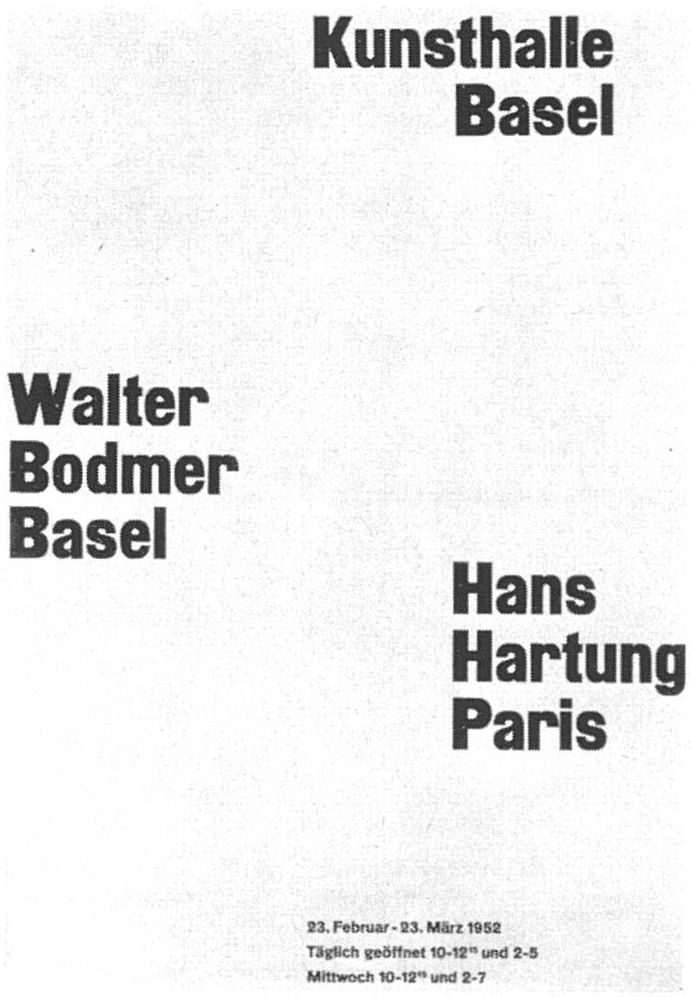
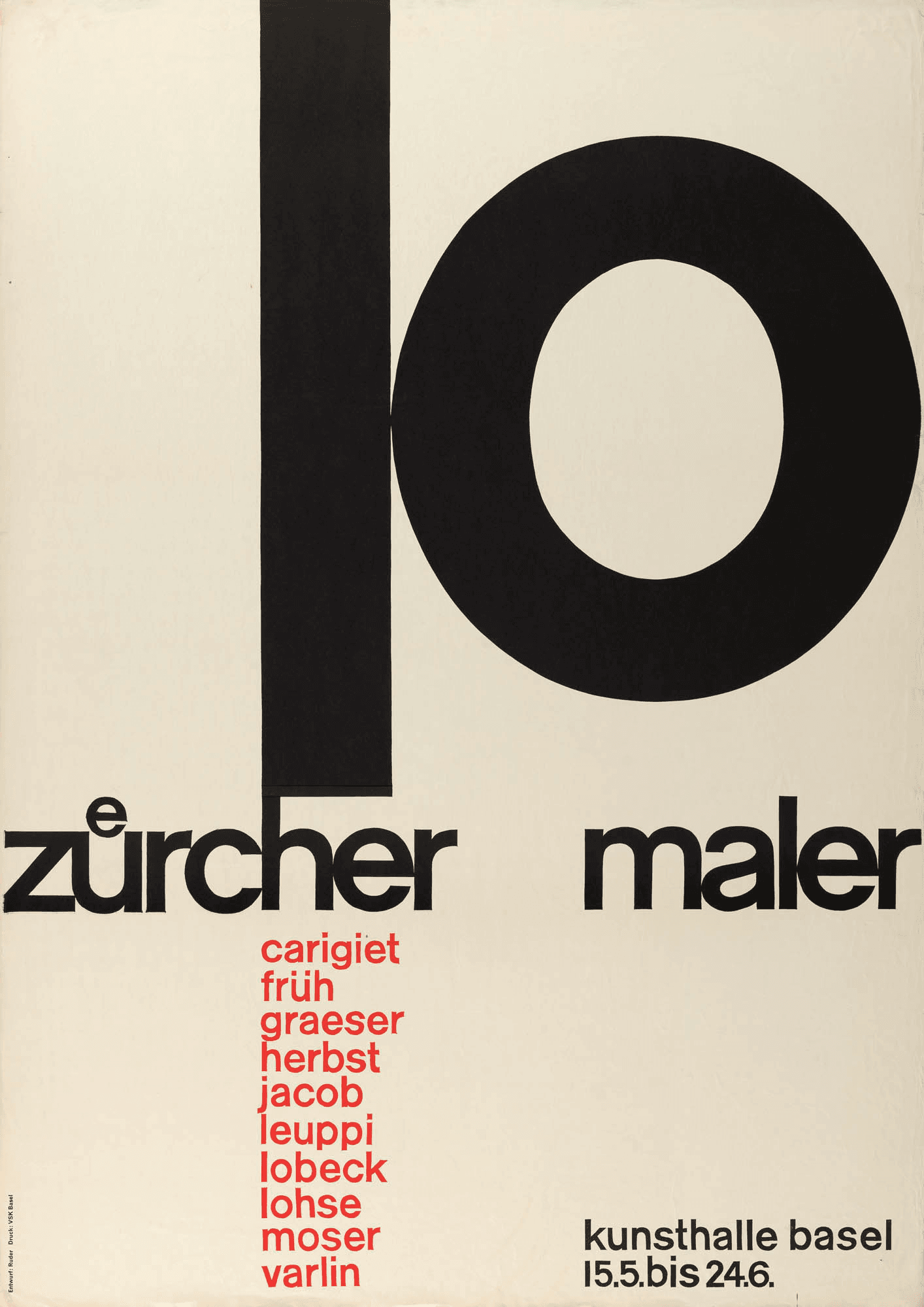
Basel typography curriculum (1947–1970) — Ruder’s primary output was pedagogical rather than client-facing. The Basel department he ran produced generations of Swiss and international typographers whose work carried his method into studios across Europe and North America.

Typographie: A Manual of Design (1967) — bilingual textbook, published by Niggli. Structured as a sequence of exercises: unit, line, word, rhythm, proportion, point, plane, contrast, form, function. The textbook most widely assigned in typography courses alongside Müller-Brockmann’s grid book.

Typografische Monatsblätter editorial direction (1958–1970) — Ruder’s essays in TM were the running theoretical commentary behind the Basel teaching. Many were later anthologised in the textbook.

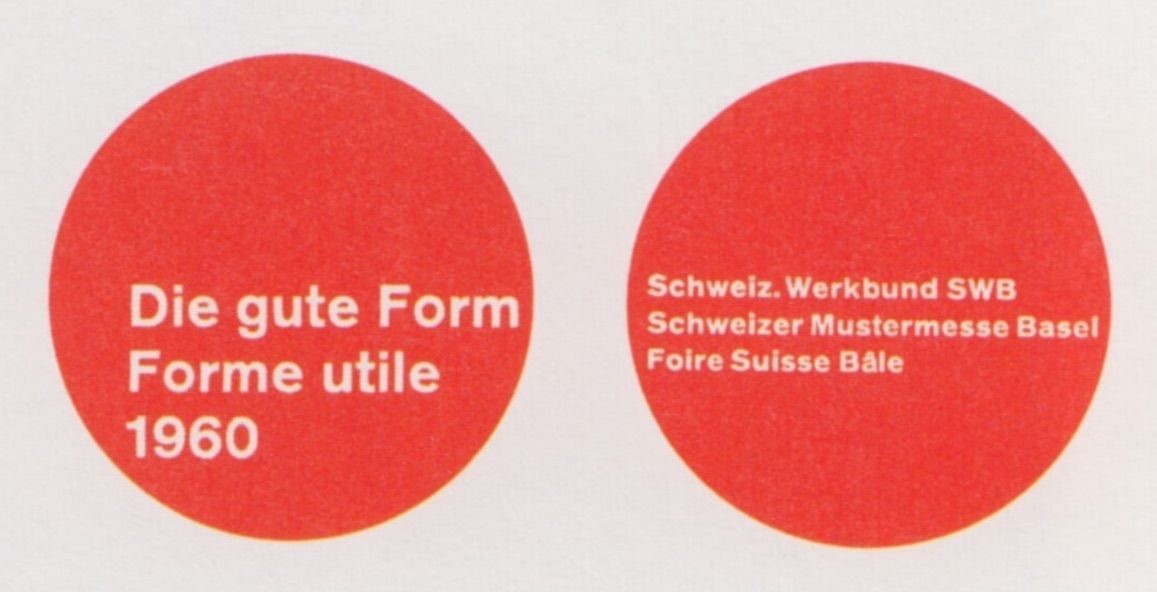
Univers teaching adoption (1957) — Ruder was the first major typography programme to treat Frutiger’s 21-weight Univers as the core teaching typeface, organising student exercises around its numerical matrix rather than named fonts.

Iconic works

Basel School typography curriculum, 1947/1970

Basel School typography curriculum

1947/1970

Two-decade teaching programme at the Allgemeine Gewerbeschule Basel. Systematic type exercises focused on legibility, rhythm, function and the working relationship between type and grid. Specimen sheets and student exercises from the programme are held in the archive of the Schule für Gestaltung Basel (the Allgemeine Gewerbeschule's successor institution) and examples are in the collection at MoMA, New York. The programme trained typographers including Wolfgang Weingart and Steff Geissbühler, whose work carried the Basel method into studios across Europe and North America.
Basel School typography curriculum (1947/1970).
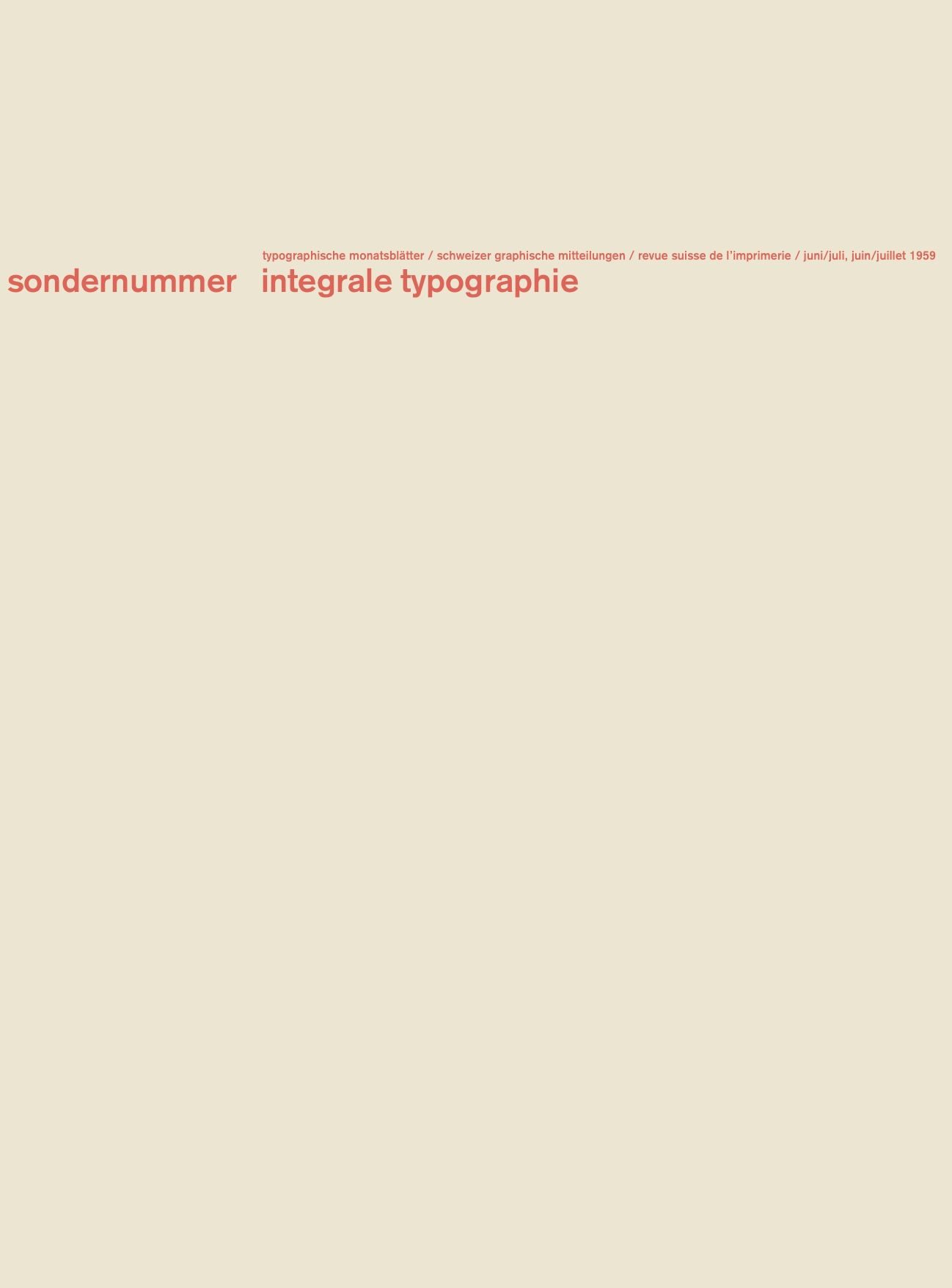
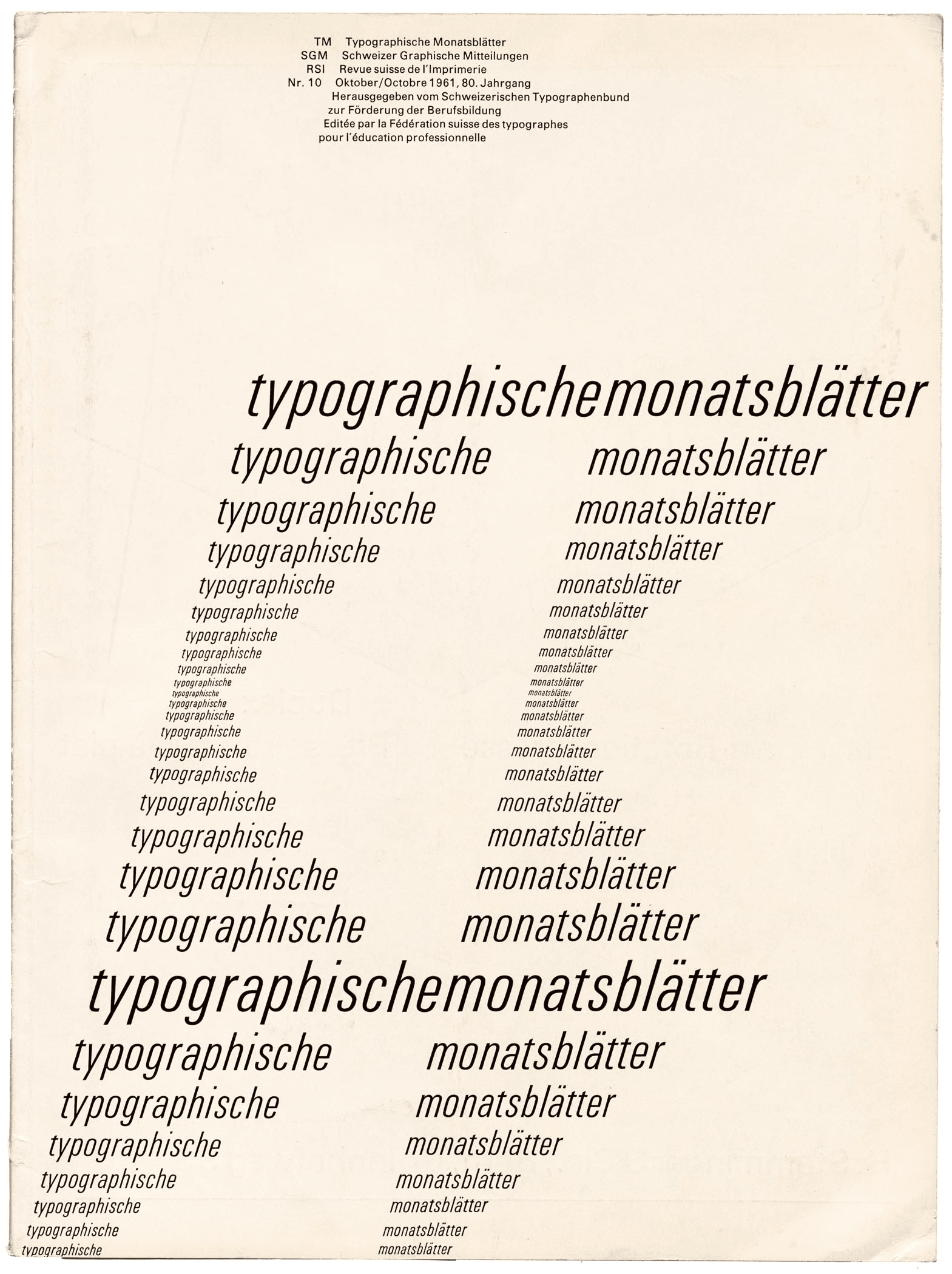
Typografische Monatsblätter (editorial direction), 1958/1970

Typografische Monatsblätter (editorial direction)

1958/1970

Swiss typography journal founded in 1933 and published from Basel, widely regarded as the longest-running specialist typography periodical in the German-speaking world. Ruder contributed essays and guest-edited issues from 1958; many of those pieces were later incorporated into Typographie (1967). His editorial work made TM one of the primary channels through which Basel typographic thinking reached studios across Europe and North America in the 1960s.
Typografische Monatsblätter (editorial direction) (1958/1970).
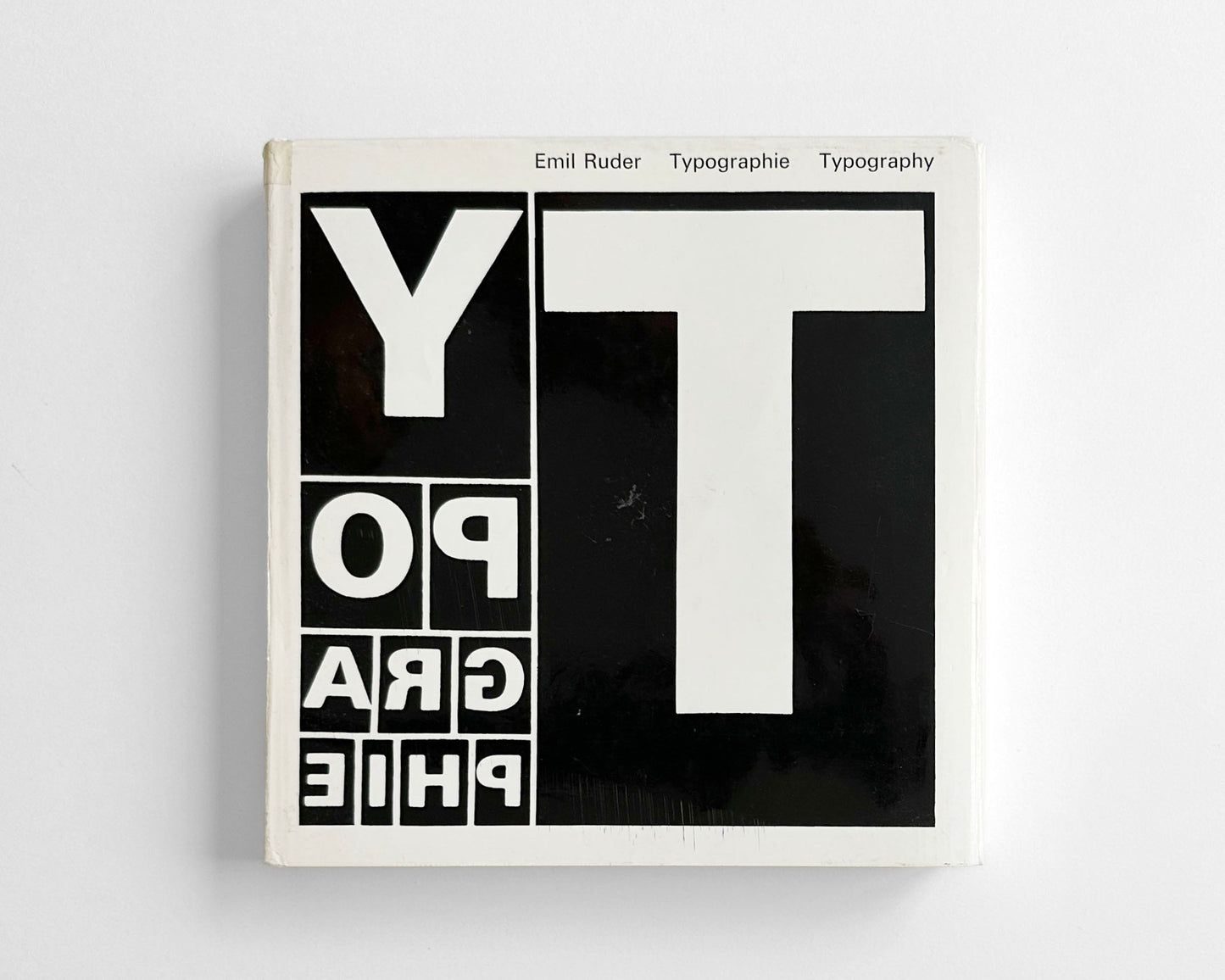
Typographie / Typography — A Manual of Design, 1967

Typographie / Typography — A Manual of Design

1967

Bilingual textbook published by Arthur Niggli AG, Teufen, Switzerland, with German and English text set on facing pages. The book sequences nine exercises (unit, line, word, rhythm, proportion, point, plane, contrast, form, function) and incorporates student specimen work from the Basel programme. Held alongside Hofmann's Graphic Design Manual and Müller-Brockmann's Grid Systems as the three-volume Swiss-school canon, it remains continuously in print.
Typographie / Typography — A Manual of Design (1967).

Influence & legacy

Ruder’s influence runs primarily through his students and his textbook. Wolfgang Weingart — the designer who broke Swiss typography open in the 1970s — was Ruder’s student and successor at Basel; so were Steff Geissbühler, Peter Teubner and generations of Swiss typographic specialists. Through the Basel summer programme and its Yale extension, American designers including April Greiman and Dan Friedman absorbed the method directly.

The three-volume Swiss-school canon — Müller-Brockmann’s Grid Systems (1981), Hofmann’s Graphic Design Manual (1965) and Ruder’s Typographie (1967) — is still the foundational reading list for any serious typography curriculum. Ruder’s volume is the most technical of the three: where Hofmann wrote about form in general and Müller-Brockmann about layout structure, Ruder wrote specifically about typography as a craft with its own systematic demands.

MoMA holds examples of his teaching-programme specimens. The Schule für Gestaltung Basel (the Allgemeine Gewerbeschule’s successor institution) maintains his archive.

Learn at TGDS

Ruder’s systematic approach to typography underlies how we teach type at TGDS. If his work interests you, the most direct next steps are:

Courses

Further reading

Books

  • Emil Ruder, Typographie: A Manual of Design / Typographie: Ein Gestaltungslehrbuch (Niggli, 1967).
  • Helmut Schmid (ed.), Emil Ruder: Typography — The Manual (Niggli, 1981; reissue).
  • Robin Kinross, Modern Typography (Hyphen Press, 1992 / 2nd ed. 2004) — Basel School coverage.
  • Kerry William Purcell, Swiss Graphic Design: The Origins and Growth of an International Style, 1920–1965 (Yale University Press, 2006).

Get Started.

You can enrol any day of the year. We are online and study is self-paced, there is no pressure. Enrol when you are ready to start, from anywhere in the world. If you would like to chat or email, feel free to get in touch.

Brochures, Phone Calls & Questions

You can download a free brochure, book a phone call with one of our course advisors, or simply ask a question.

Other ways to get in touch

Australia 1300 655 485

International +61 1300 655 485

Ask Anything info@thegraphicdesignschool.com

Get a quote accounts@thegraphicdesignschool.com

Acknowledgement of Country
The Graphic Design School acknowledges the Traditional Custodians of Country throughout Australia and their continued spiritual connection to land.
We pay respect to Elders past, present and emerging.
Always was, always will be.
RTO Provider № 91706