Design history · 1960s–1970s

Herb Lubalin

The New York designer who treated letterforms as characters — and rewrote expressive typography.

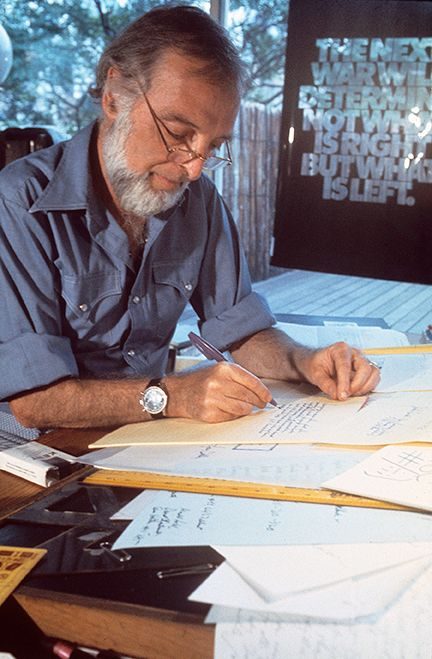
Herb Lubalin (1918–1981) is the American graphic designer who turned typography into emotional communication. His Mother & Child logo, the Avant Garde Gothic typeface, and U&lc magazine reshaped how editors, art directors and type designers thought about letterforms for two generations.

Key facts

Born
17 March 1918, New York City, USA
Died
24 May 1981, New York City, USA (aged 63)
Nationality
American
Era
American mid-century · Expressive typography · Editorial design
Studios
Sudler & Hennessey (art director) · Herb Lubalin Inc. (founded 1964) · International Typeface Corporation (co-founder, 1970)
Known for
Mother & Child logo (1965) · Avant Garde Gothic (1970) · U&lc magazine (1973) · Eros / Fact / Avant Garde magazines for Ralph Ginzburg

Biography

Herb Lubalin was born in New York City in 1918 to a Jewish family whose parents had emigrated from the Russia-Lithuania border region. He enrolled at Cooper Union at seventeen and graduated in 1939 — a school whose free tuition shaped generations of American designers and to which Lubalin would later return as patron and teacher.

His early career was in advertising. He spent nearly two decades at Sudler & Hennessey, the pharmaceutical and medical-advertising agency, rising to art director. The commercial discipline mattered: Lubalin learned to solve communication problems at speed and to make typography carry the full weight of an idea when budgets ruled out photography or illustration.

In 1964 he opened Herb Lubalin Inc. His magazine work with publisher Ralph Ginzburg — Eros (1962), Fact (1964) and Avant Garde (1968) — defined his public voice: tight, ligatured display type used as image. In 1970 he co-founded the International Typeface Corporation with Aaron Burns and Ed Rondthaler, one of the first type foundries designed around the economics of photo-typesetting and licensing.

From 1973 he edited U&lc, ITC’s tabloid-format house journal, which reached a peak circulation in the hundreds of thousands. He was inducted into the Art Directors Hall of Fame in 1977 and received the AIGA Medal in 1980. He died in New York in 1981, aged 63.

Design philosophy

Lubalin’s governing idea was that letterforms are characters — that type carries meaning not only through what it spells but through how it behaves on the page. Where the Swiss school treated typography as a neutral instrument for information, Lubalin treated it as performance.

His working vocabulary — tight letterspacing, aggressive ligatures, overlapping forms, counters weaponised as pictorial space — came out of the technical constraints of photo-typesetting. Photo-type let designers kern letters to collision in a way hot-metal never could. Lubalin saw the opportunity immediately and built an entire expressive grammar on top of it.

The second premise: editorial typography is an argument. His magazine mastheads for Ginzburg, his Mother & Child mark, the Marriage and Families identities — each one compresses an editorial thesis into a single typographic gesture. Type, for Lubalin, is not the vehicle for content; it is content.

Key works

Mother & Child logo (1965) — designed for a proposed magazine that was never launched. The ampersand cradles a lowercase “child” inside the “o” of “Mother”. Probably the most reproduced single logotype of the twentieth century and a textbook example of typography-as-image.

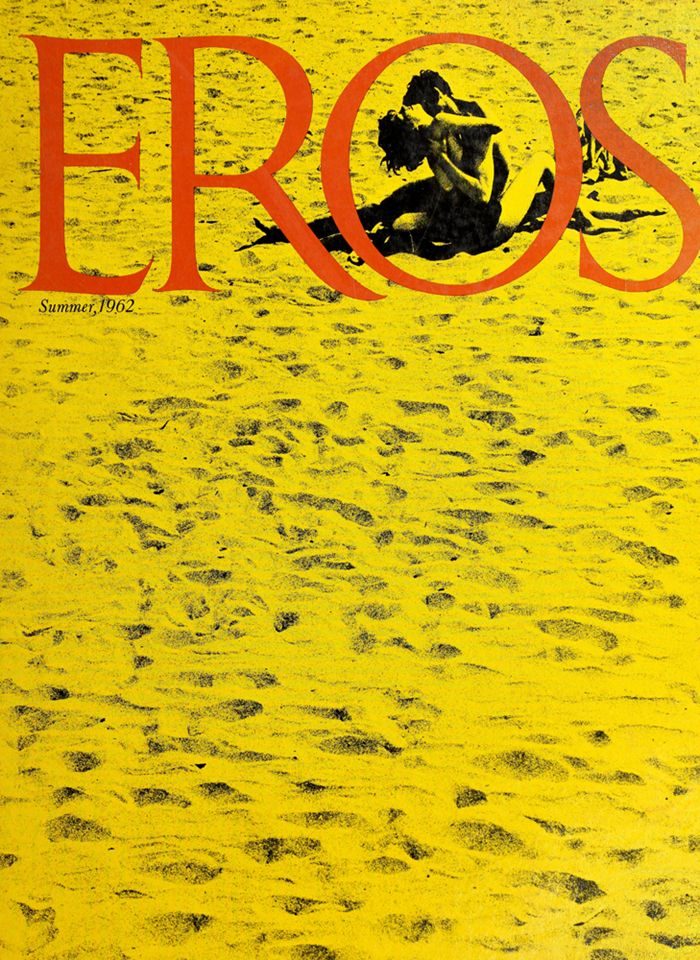
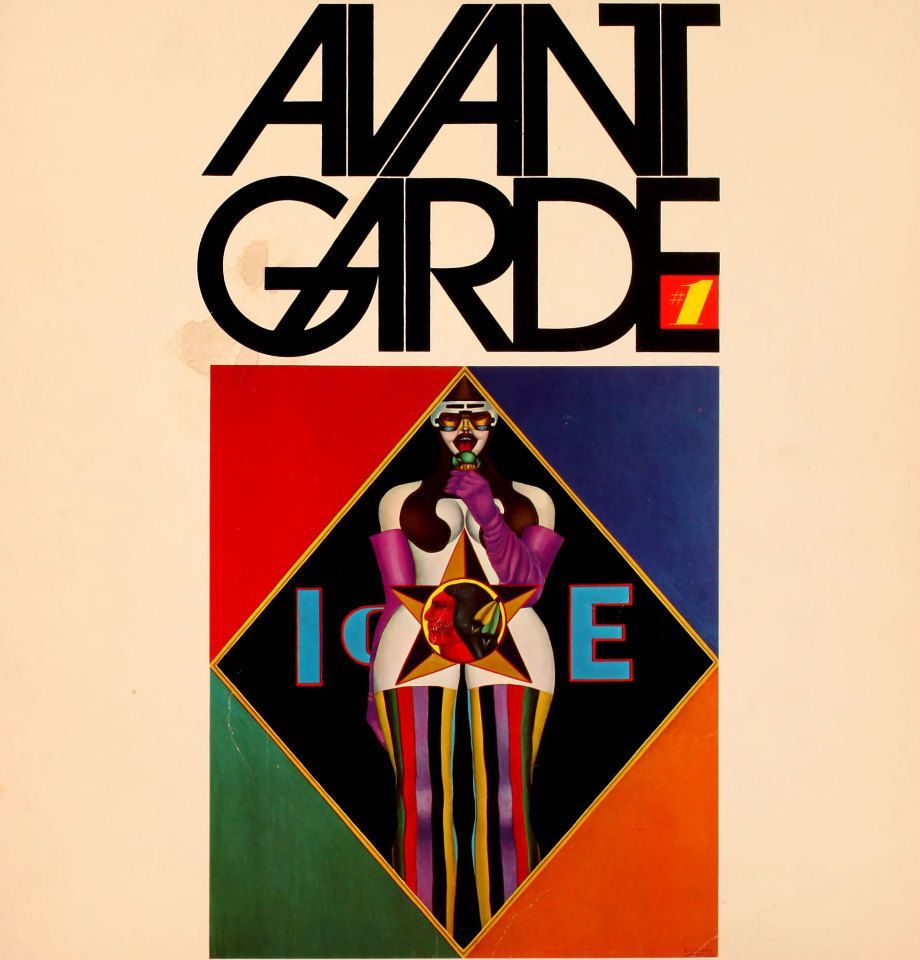
Eros, Fact and Avant Garde magazines (1962–1971) — three publications for editor and publisher Ralph Ginzburg, each one a platform for expressive editorial typography. Eros was shut down after four issues by an obscenity conviction; Fact and Avant Garde continued Lubalin’s experiment with the magazine page as a typographic composition.

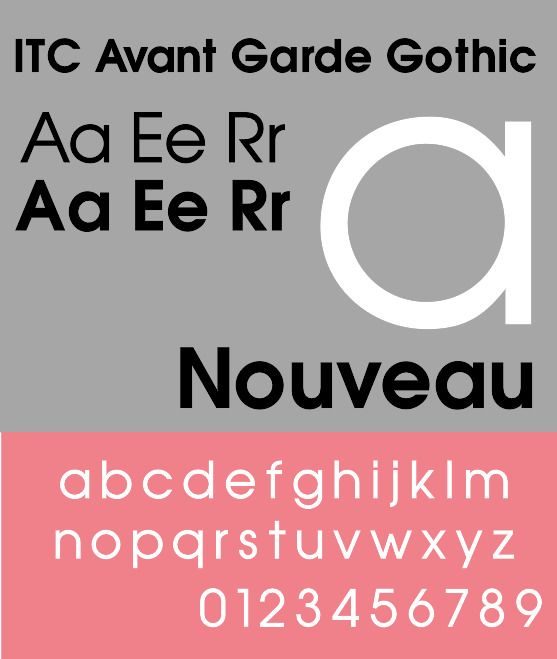
ITC Avant Garde Gothic (1970) — geometric sans-serif designed with Tom Carnase, expanded from the Avant Garde masthead into a full typeface family. Its set of tightly-fitting ligatures became one of the defining display looks of the 1970s.

International Typeface Corporation (1970) — co-founded with Aaron Burns and Ed Rondthaler. ITC was the first major type licensing house built for the photo-typesetting era. It controlled an enormous share of commercial display type in the 1970s and 1980s and published U&lc as its house journal.

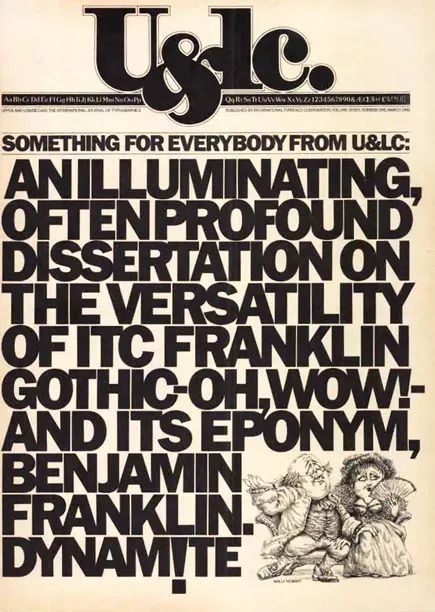
U&lc magazine (1973–1999) — oversized tabloid quarterly edited and designed by Lubalin until his death in 1981. U&lc functioned as ITC’s marketing vehicle, a specimen book, an editorial platform, and the field’s most-read typographic magazine — all at once.

ITC Lubalin Graph (1974) — slab-serif released by ITC as the companion to Avant Garde Gothic. It remains one of the most widely licensed slab-serif designs of the photo-type era.

Iconic works

Mother & Child logo, 1965

Mother & Child logo

1965

Unpublished logotype designed for a proposed magazine called Mother & Child. The ampersand cradles a lowercase "child" inside the counter of the "o" in "Mother", encoding the idea of containment in a single typographic mark. The original artwork is held at the Herb Lubalin Study Center of Design and Typography at Cooper Union, New York. Frequently cited in typographic scholarship as a defining example of letterform-as-image.
Mother & Child logo (1965).
ITC Avant Garde Gothic, 1970

ITC Avant Garde Gothic

1970

Geometric sans-serif typeface designed with Tom Carnase and released through the International Typeface Corporation in 1970. Its proportions and ligature set were drawn directly from the masthead Lubalin designed for Avant Garde magazine in 1968. Originally issued in four weights, the family was later extended by other designers and remains commercially available through Monotype.
ITC Avant Garde Gothic (1970).
ITC Lubalin Graph, 1974

ITC Lubalin Graph

1974

Slab-serif companion to Avant Garde Gothic, released through the International Typeface Corporation. Lubalin adapted the geometric construction of Avant Garde Gothic by adding bracketed rectangular serifs; later weights were completed by Joe Sundwall. The design remains commercially available and is one of the most widely licensed slab-serif designs of the photo-typesetting era.
ITC Lubalin Graph (1974).
U&lc (Upper and lower case) magazine, 1973/1999

U&lc (Upper and lower case) magazine

1973/1999

Tabloid-format house journal of the International Typeface Corporation, published from 1973 to 1999. Lubalin designed and edited each issue from launch until his death in 1981, treating every page spread as a typographic composition in its own right. At peak circulation the publication reached approximately 200,000 readers. After Lubalin's death, editorial and design direction passed to other ITC staff until the final issue in 1999.
U&lc (Upper and lower case) magazine (1973/1999).
Eros magazine, 1962

Eros magazine

1962

Quarterly magazine art-directed by Lubalin for publisher Ralph Ginzburg, published across four issues in 1962 and 1963. Ginzburg's federal obscenity prosecution ended the publication; the Supreme Court upheld his conviction in 1966. The typographic treatment, which used oversized display type at tight letterspacing, is documented in Snyder and Peckolick's 1985 Lubalin monograph.
Eros magazine (1962).
Avant Garde magazine masthead, 1968

Avant Garde magazine masthead

1968

Masthead designed with Tom Carnase for the first issue of Avant Garde magazine, published in January 1968. The interlocking capitals, with their closely fitted ligatures, were the direct source for the ITC Avant Garde Gothic typeface family, which ITC released two years later in 1970. Original issues of Avant Garde magazine are held in design library collections including the Herb Lubalin Study Center at Cooper Union.
Avant Garde magazine masthead (1968).

Influence & legacy

Lubalin’s influence runs through every designer who has ever set display type for emotional rather than merely informational effect. His direct descendants include Ed Benguiat, Tom Carnase, Tony DiSpigna and Tony Stan at ITC; his editorial influence reaches through Rolling Stone, Esquire and the 1980s magazine boom.

The Cooper Union — Lubalin’s own school — maintains the Herb Lubalin Study Center of Design and Typography, which holds his archive and runs public programmes. It remains one of the most active research centres for twentieth-century American graphic design.

ITC as an institution outlived him and, through the licensing of Avant Garde, Lubalin Graph, Serif Gothic and dozens of other families, put his typographic vocabulary on letterheads, paperbacks and storefront signs worldwide. Every time a designer kerns a headline to collision or lets an ampersand do the work of an illustration, they are working in the territory he opened.

Learn at TGDS

Lubalin sits at the root of how we teach expressive typography and editorial design. If his work interests you, the most direct next steps are:

Courses

Further reading

Books

  • Gertrude Snyder and Alan Peckolick, Herb Lubalin: Art Director, Graphic Designer and Typographer (American Showcase, 1985) — the primary monograph, compiled by close collaborators.
  • Adrian Shaughnessy, Herb Lubalin: American Graphic Designer (Unit Editions, 2012) — the definitive contemporary survey.
  • Steven Heller and Gail Anderson, The Typography Idea Book (Laurence King, 2016) — contextualises Lubalin within expressive editorial typography.
  • U&lc: Influencing Design & Typography (Mark Batty Publisher, 2005) — an anthology surveying the magazine’s full run.

Get Started.

You can enrol any day of the year. We are online and study is self-paced, there is no pressure. Enrol when you are ready to start, from anywhere in the world. If you would like to chat or email, feel free to get in touch.

Brochures, Phone Calls & Questions

You can download a free brochure, book a phone call with one of our course advisors, or simply ask a question.

Other ways to get in touch

Australia 1300 655 485

International +61 1300 655 485

Ask Anything info@thegraphicdesignschool.com

Get a quote accounts@thegraphicdesignschool.com

Acknowledgement of Country
The Graphic Design School acknowledges the Traditional Custodians of Country throughout Australia and their continued spiritual connection to land.
We pay respect to Elders past, present and emerging.
Always was, always will be.
RTO Provider № 91706