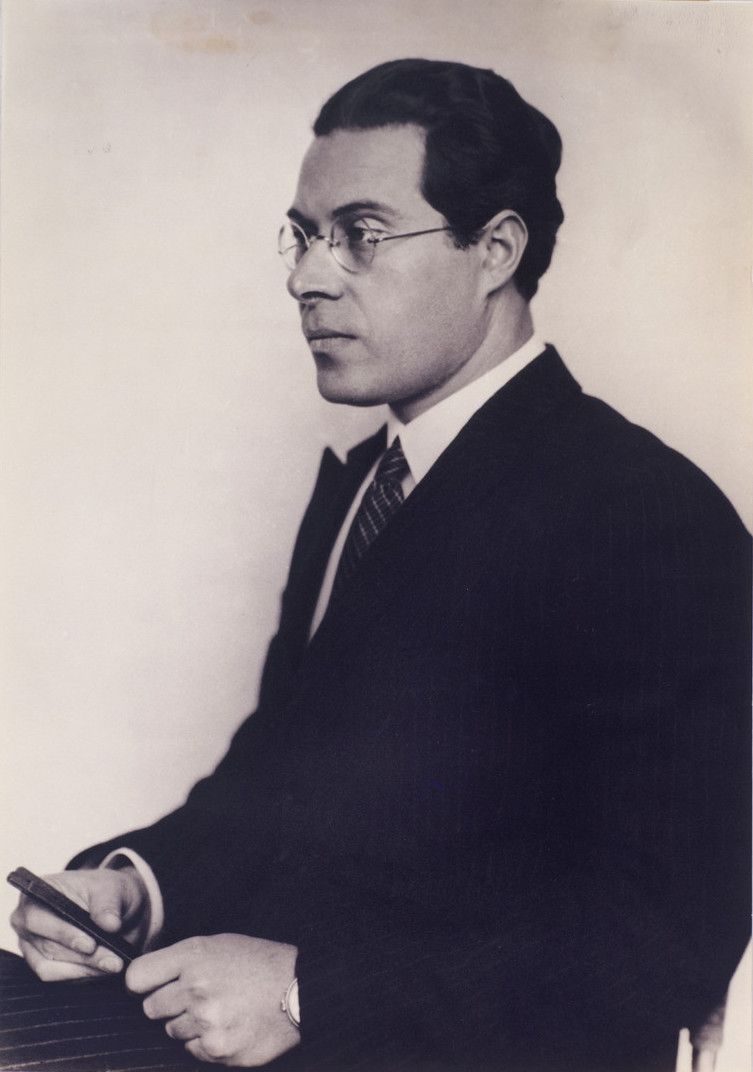
László Moholy-Nagy was born in 1895 in the small Hungarian village of Bácsborsód. He studied law in Budapest, served in the Austro-Hungarian army in the First World War, and was wounded on the Russian front. It was during his convalescence that he turned decisively from law to art, working through Cubism and Expressionism before arriving at Constructivism.
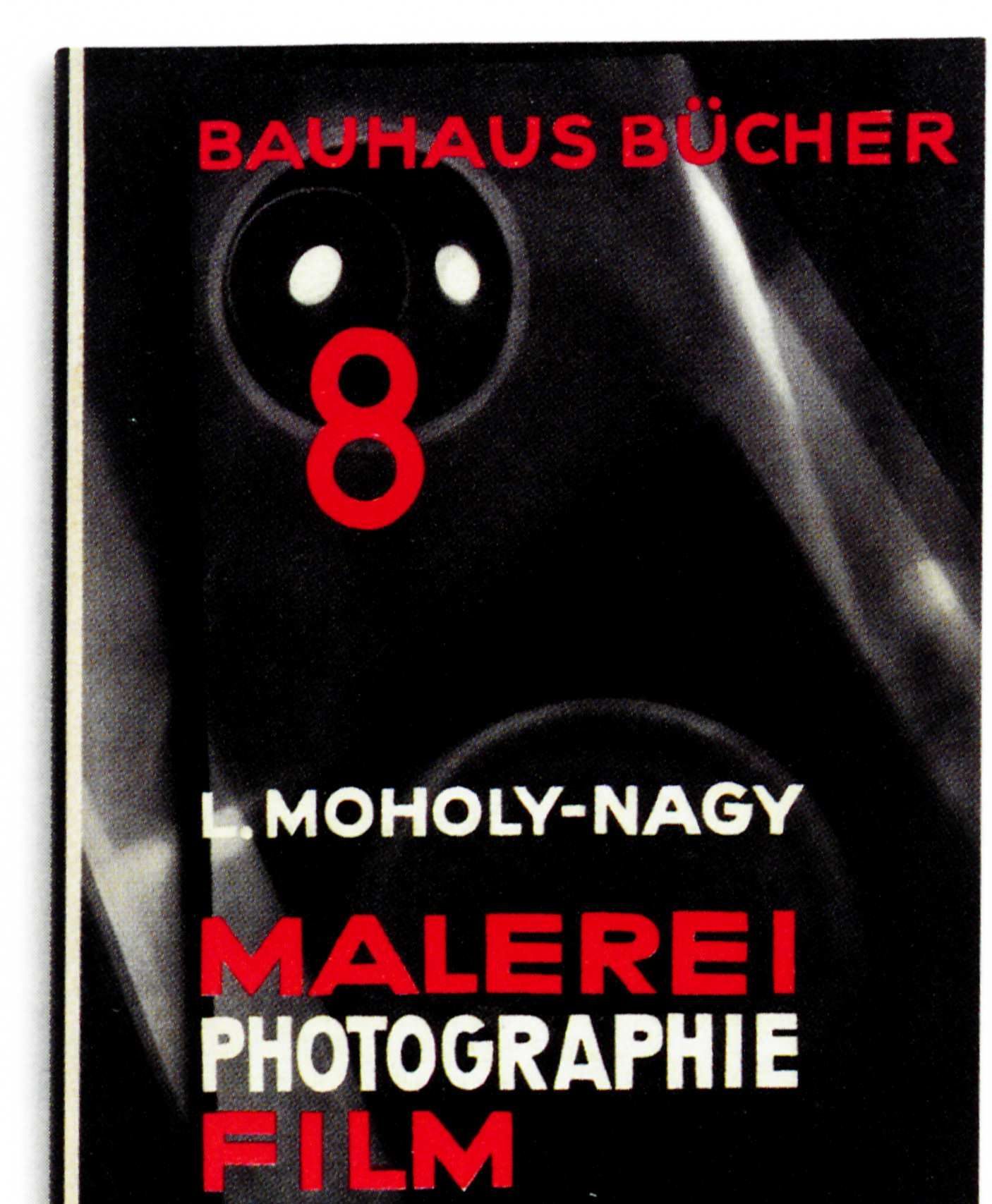
He moved to Berlin in 1920, where he encountered the Russian Constructivists and El Lissitzky. In 1923 Walter Gropius invited him to the Bauhaus in Weimar to take over the preliminary course from Johannes Itten and to run the metal workshop. He stayed until 1928, co-editing the Bauhausbücher series with Gropius and writing two of its foundational volumes.
After leaving the Bauhaus he worked as a freelance designer in Berlin on typography, exhibition design, stage sets and film. The rise of National Socialism pushed him to Amsterdam in 1934 and London in 1935, where he took on commercial commissions including London Transport posters and photographic work for Imperial Airways.
In 1937 the Association of Arts and Industries in Chicago invited him to found a successor to the Bauhaus in America. The New Bauhaus opened that year; after financial failure he reopened it as the School of Design in 1939, which became the Institute of Design in 1944 and eventually merged with Illinois Institute of Technology. He directed the school until his death from leukaemia in Chicago in 1946.