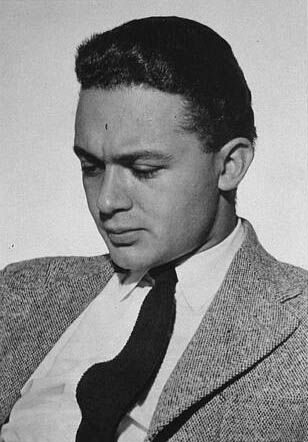
Paul Rand was born Peretz Rosenbaum in Brooklyn in 1914 to Orthodox Jewish parents. He began drawing commercial signs for his father’s grocery store as a child, and by his mid-teens he had enrolled in Pratt Institute, Parsons, and the Art Students League simultaneously — none of which, he later said, taught him much. What taught him was the European avant-garde: Bauhaus books, De Stijl, Moholy-Nagy, Lissitzky. He Americanised his name before turning twenty and never looked back.
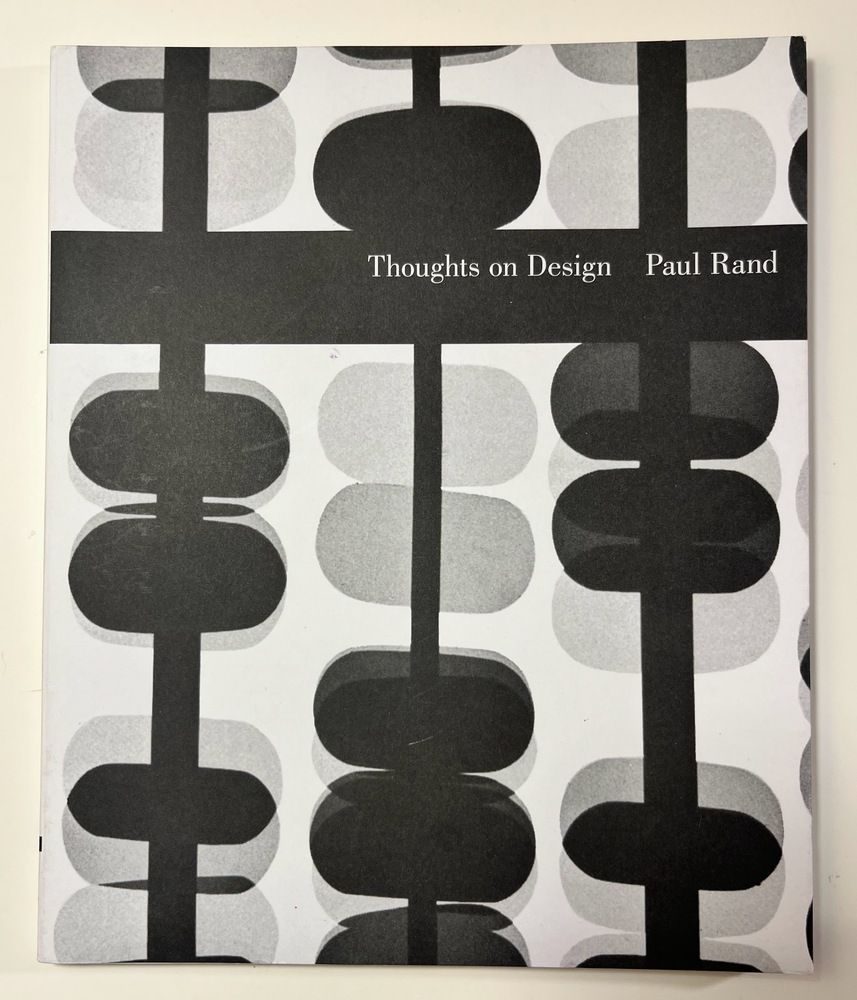
His first design break came in the early 1940s at the Weintraub Advertising Agency, where he art-directed campaigns that brought European modernism into American mass media. In 1947 — still in his early thirties — he published Thoughts on Design, a slim book of essays that became a touchstone for a generation of designers trained after him.
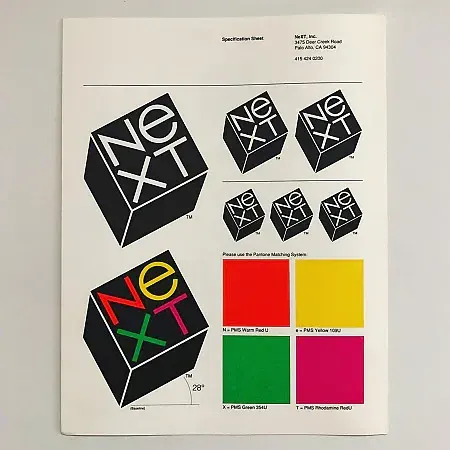
From 1956 onwards, Rand’s corporate identity work defined the postwar American visual landscape. IBM hired him in 1956 and kept hiring him for forty years. UPS, Westinghouse, ABC, Cummins Engine, Yale University Press and — in a famous late-career engagement with Steve Jobs — NeXT Computer all commissioned marks that became part of everyday life.
He taught at Yale School of Art from 1956 until his death in 1996, shaping designers who would themselves shape the next decades of the profession. His approach was relentlessly verbal as well as visual: every major mark was accompanied by a written argument.