Design history · 1960s

Saul Bass

The designer who made film titles a discipline of their own.

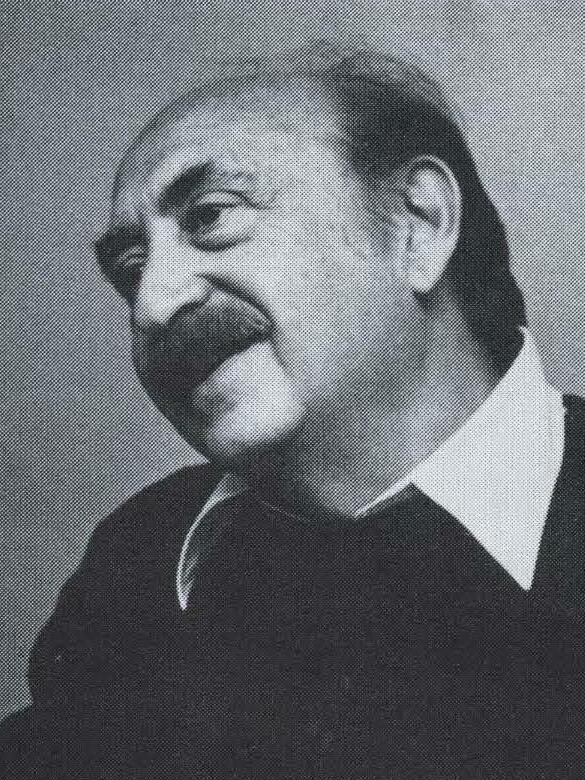
Saul Bass (1920–1996) is the American graphic designer who turned the opening credits of a film into a narrative instrument. His sequences for Preminger, Hitchcock and Scorsese — and his logos for AT&T, United Airlines and Quaker — demonstrate how typography, motion and restraint combine to set the tone of everything that follows.

Key facts

Born
8 May 1920, The Bronx, New York
Died
25 April 1996, Los Angeles, California
Nationality
American
Era
Mid-century modern / motion graphics pioneer
Studios
Buzza-Cardozo (1946) · Saul Bass & Associates (1950) · Bass/Yager (1978)
Known for
Film title sequences (Preminger / Hitchcock / Scorsese) · AT&T, Bell, United Airlines, Quaker, Girl Scouts logos

Biography

Saul Bass was born in the Bronx in 1920 and came to design through evening classes at the Art Students League of New York, studying briefly with the Hungarian émigré designer György Kepes. His early career was in New York advertising; he moved to Los Angeles in 1946 looking for film work and stayed for the rest of his life.

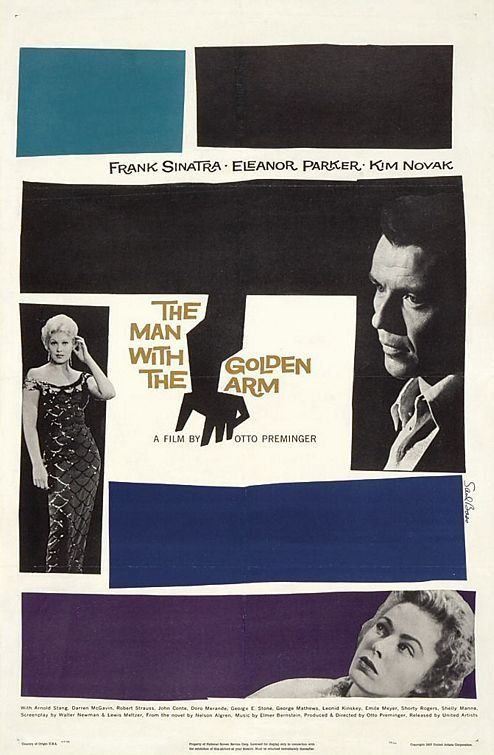
In 1954 Otto Preminger asked him to design the poster for Carmen Jones, then extended the commission to include the opening titles. The following year Bass’s sequence for Preminger’s The Man with the Golden Arm — vertical animated bars choreographed against straight typography — announced a new discipline. Until then, film credits were housekeeping. Bass turned them into a prologue.

Over four decades he designed identities for AT&T, Bell, United Airlines, Continental, Quaker Oats, Warner Communications, the Girl Scouts, Exxon, Celanese and dozens more — most of them still recognisable, several still in use. He ran his Los Angeles studio with his wife and creative partner Elaine Bass from the late 1970s onward.

His late collaborations with Martin Scorsese (Goodfellas, Cape Fear, The Age of Innocence, Casino) proved that the modernist language he established in 1955 could carry forty years of cultural change. He died in Los Angeles in 1996, having shaped both film and the logo systems of postwar American business.

Design philosophy

Bass’s position, repeated in every interview and lecture he gave, was that design is an act of reduction under pressure. A title sequence has thirty seconds to establish mood; a logo has one glance to establish trust. Everything that doesn’t earn its place is noise.

“Symbolise and summarise. My initial thoughts about what a title could do was to set mood and the prime underlying core of the film’s story, to express the story in some metaphorical way.” — Saul Bass

He talked about title sequences as bookends — the transition from real life into the world of the film. He was hostile to decoration and dismissive of design that existed only to be clever. What interested him was economy of means: the fewest possible elements, doing the most possible work. Marlene McCarty described his Man with the Golden Arm sequence as showing that “if you put animation, typography, and rhythm together, you can make something dynamic and amazing. You don’t need a thousand filters or a hundred renderings to engage people.”

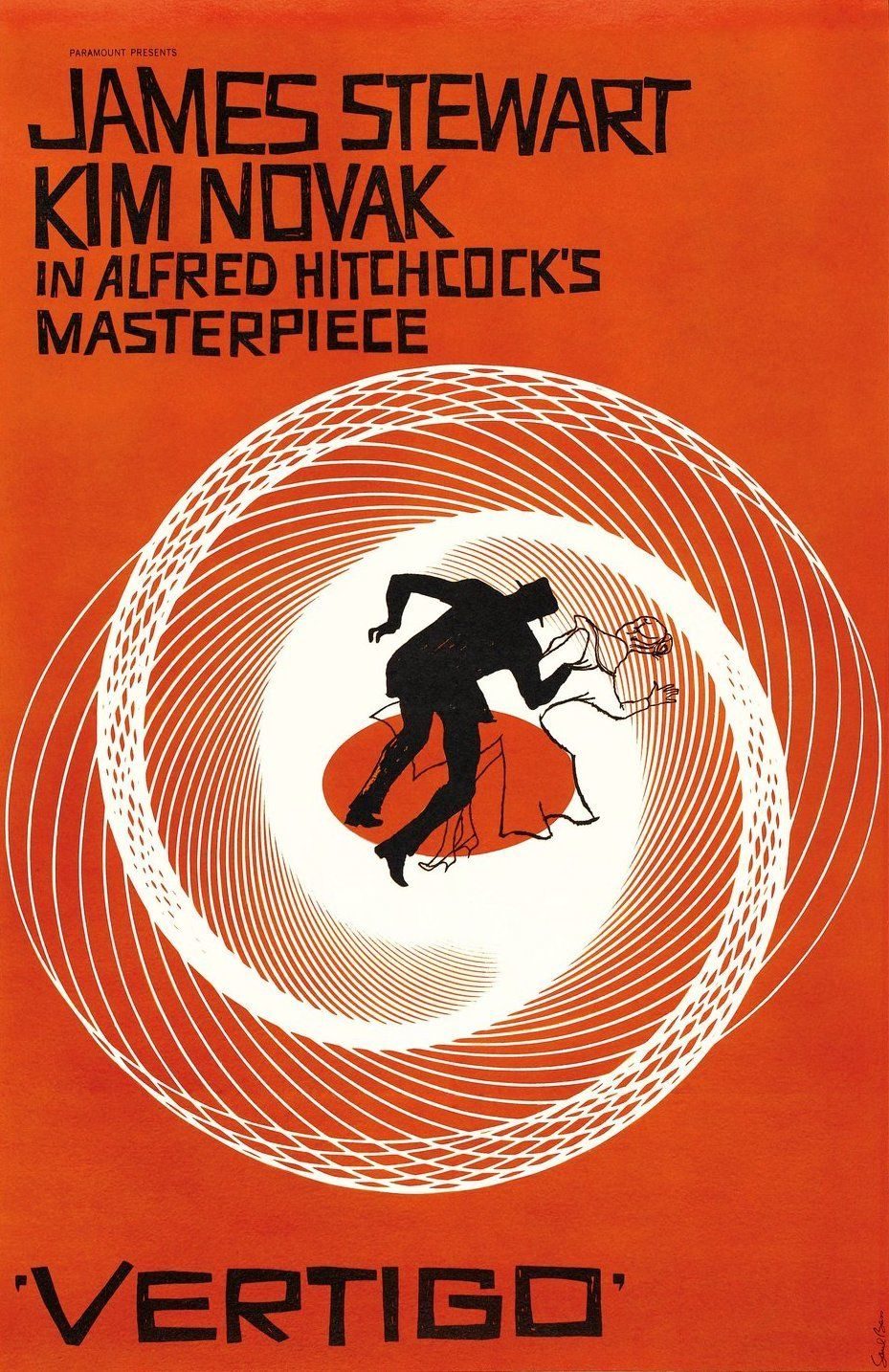
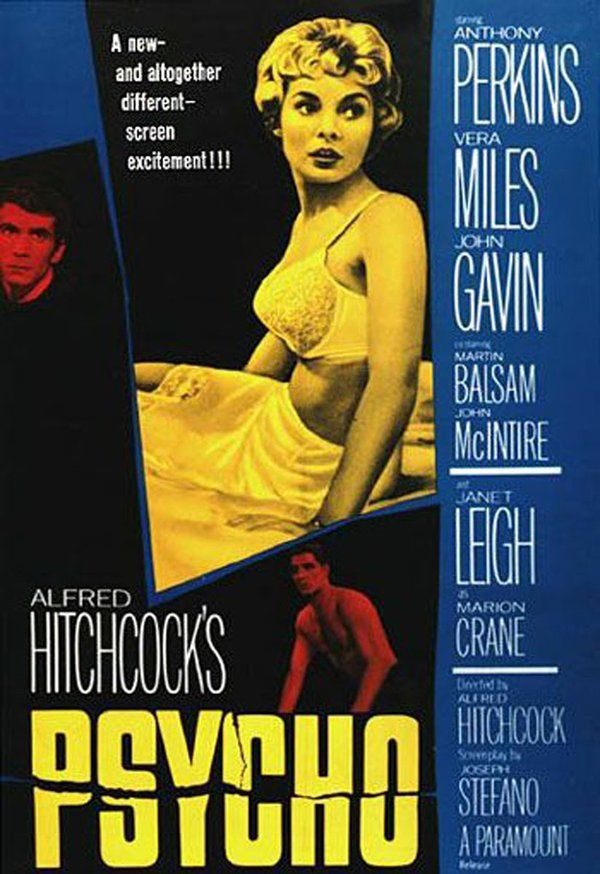
His second premise was that form carries meaning. The sharp horizontal bars of Psycho prepare you for knives. The spiralling Lissajous figures of Vertigo prepare you for obsession. Bass treated graphic form as narrative instrument.

Key works

The Man with the Golden Arm (1955) — The canonical opening of the modern title-sequence era. Black-and-white vertical bars animate against straight typography, resolving into the silhouette of an arm. Done frame-by-frame at a Los Angeles optical house.

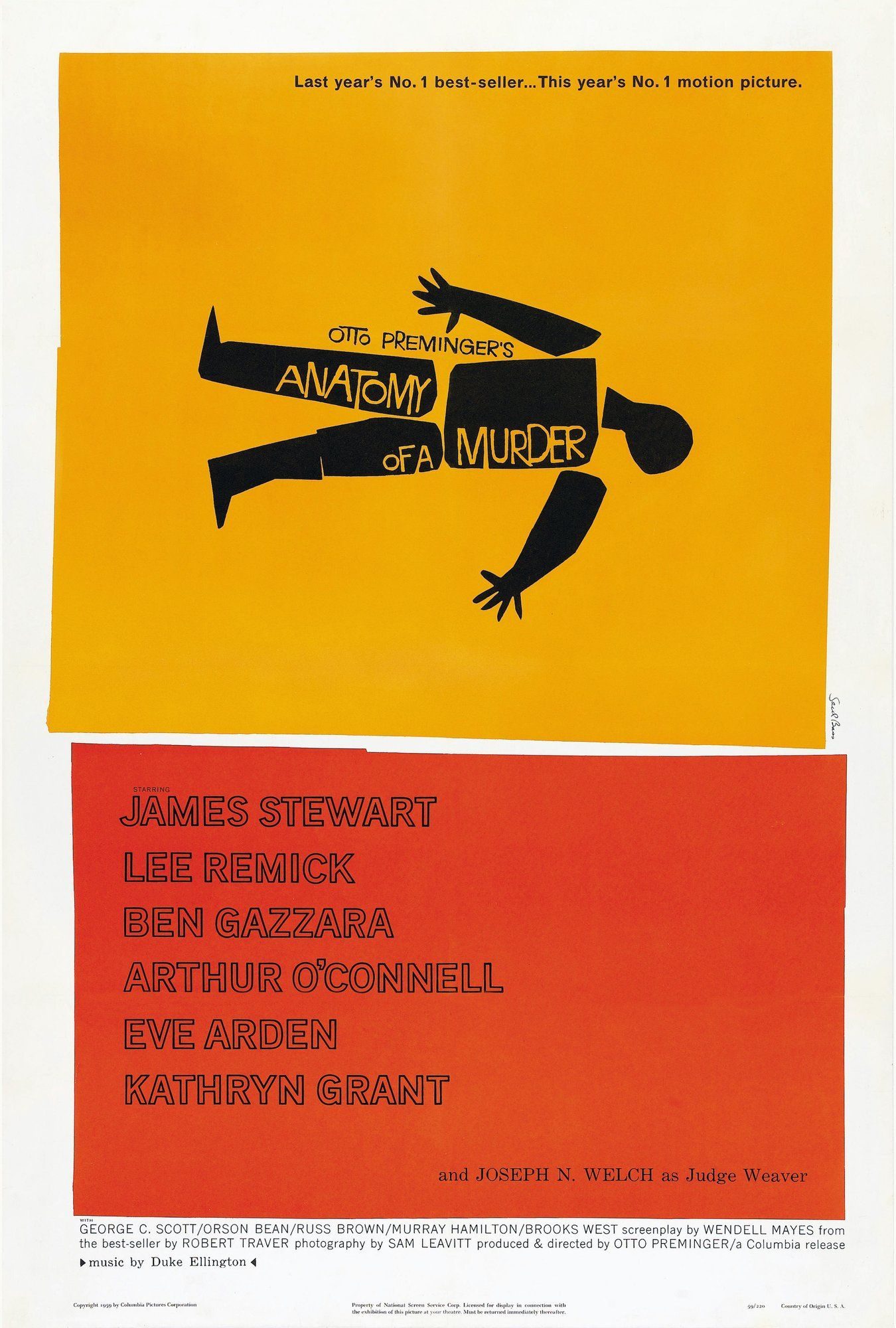
Anatomy of a Murder (1959) — The fragmented corpse silhouette extended from title sequence into poster, trade ad and soundtrack sleeve. One of the most imitated graphic images of the decade.

Psycho (1960) — Sharp horizontal bars slice the title apart and re-form it. A visual preparation for what follows.

Vertigo (1958) — Hitchcock collaboration in which John Whitney’s mechanical computer — a repurposed WWII anti-aircraft fire-control calculator — generated the spiral Lissajous figures.

AT&T globe (1983) — The striped sphere designed after the Bell system breakup. In continuous use until 2005.

United Airlines (1974), Quaker Oats (1969), Continental (1968), Girl Scouts (1978) — The corporate identity work that ran parallel to the film titles across Bass’s peak decades.

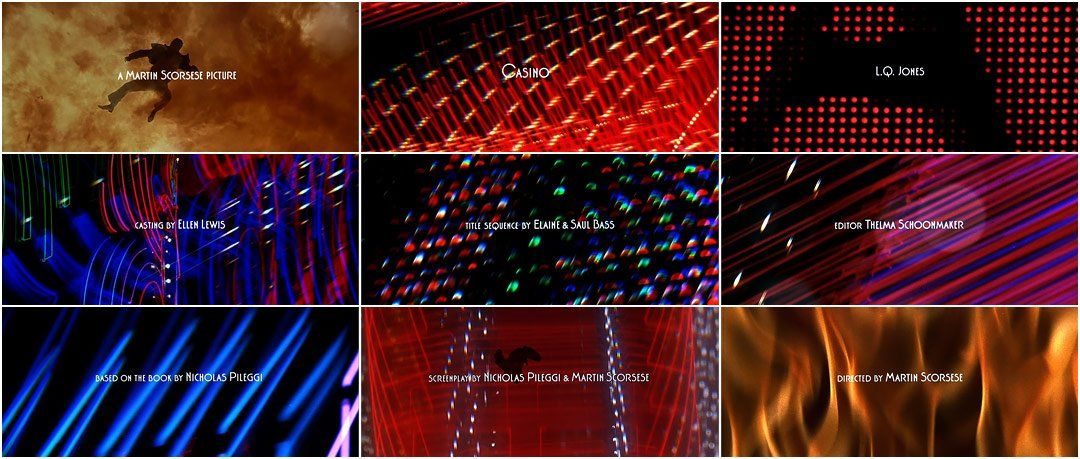
Casino (1995) — Bass’s final Scorsese collaboration, designed with Elaine Bass. A falling figure engulfed in flame.

Iconic works

The Man with the Golden Arm (title sequence), 1955

The Man with the Golden Arm (title sequence)

1955

Title sequence for Otto Preminger's United Artists film about heroin addiction. Animated white bars choreograph against straight typography, resolving into the silhouette of a bent arm. The sequence, produced frame-by-frame at a Los Angeles optical house, is cited as the work that established the title sequence as a creative discipline in its own right.
The Man with the Golden Arm (title sequence) (1955).
Vertigo (title sequence), 1958

Vertigo (title sequence)

1958

Title sequence for Alfred Hitchcock's Paramount film, produced in collaboration with artist and engineer John Whitney. Whitney's mechanical analogue computer, a repurposed WWII anti-aircraft fire-control calculator, generated the mathematical spiral forms known as Lissajous figures. Bass also designed the film's poster, combining the spiral motif with silhouetted falling figures.
Vertigo (title sequence) (1958).
Psycho (title sequence), 1960

Psycho (title sequence)

1960

Title sequence for Alfred Hitchcock's Paramount film. Sharply cut horizontal bars fragment and reassemble the credit text, the pace of cuts establishing the film's tone before the narrative begins. Bass also contributed visual storyboards to the production, an early instance of a title designer working as a visual consultant on the film itself.
Psycho (title sequence) (1960).
Anatomy of a Murder (poster + title sequence), 1959

Anatomy of a Murder (poster + title sequence)

1959

Poster and title sequence for Otto Preminger's courtroom drama, based on Robert Traver's 1958 novel. Bass designed a fragmented human silhouette in stark black and white that carried across the film's poster, trade advertising and LP sleeve for Duke Ellington's jazz score. The image was reproduced widely in print advertising throughout the 1960s.
Anatomy of a Murder (poster + title sequence) (1959).
AT&T logo (globe mark), 1983

AT&T logo (globe mark)

1983

Corporate identity mark commissioned following the 1982 consent decree that required AT&T to divest its regional operating companies. The striped sphere, formed from 13 horizontal bands of graduating width, replaced the pre-breakup Bell bell mark to represent global reach. Designed by Bass/Yager & Associates, the mark was introduced in 1984 and remained AT&T's primary identity until 2005.
AT&T logo (globe mark) (1983).
United Airlines logo, 1974

United Airlines logo

1974

Corporate identity for United Airlines, formed from two overlapping letter U shapes rotated at a 68-degree angle to produce a tulip and globe form in red, white and blue. The mark replaced United's earlier shooting star identity and remained in service until the airline's merger with Continental in 2010.
United Airlines logo (1974).
Quaker Oats logo (smiling Quaker), 1969

Quaker Oats logo (smiling Quaker)

1969

Redesign of the Quaker Oats Company's trademarked Quaker figure, which had appeared on the brand since the 1870s. Bass removed peripheral detail from the face and collar, strengthening legibility at small sizes and on packaging. A version of the simplified mark remains in use as the primary Quaker brand identity.
Quaker Oats logo (smiling Quaker) (1969).
Casino (title sequence), 1995

Casino (title sequence)

1995

Title sequence for Martin Scorsese's Universal Pictures film about Las Vegas organised crime, designed by Saul Bass and Elaine Bass. A human figure falls through a field of neon light and flame, the colour palette drawn from the Las Vegas strip to establish the film's themes of spectacle and loss. It was the fourth and final title sequence Bass designed for Scorsese, following Goodfellas (1990), Cape Fear (1991) and The Age of Innocence (1993).
Casino (title sequence) (1995).

Influence & legacy

Bass invented a discipline. Before 1955, film titles were a technical requirement. After 1955, they were a creative commission. The entire field of motion graphics — from broadcast design through contemporary film titles through UI animation — descends from the grammar he established.

His direct lineage runs through the designers he mentored and the studios he inspired: Pablo Ferro, Dan Perri, Kyle Cooper, R/GA film titles, Imaginary Forces, MK12. Working designers still point to specific Bass sequences as the moment they decided this was a real profession.

His logo work had a parallel afterlife. The AT&T globe, the United tulip, the Quaker figure and the Continental jetstream each became exemplars of postwar American corporate identity — citable alongside Paul Rand’s IBM or Chermayeff & Geismar’s Chase.

Most importantly, Bass made graphic designers filmmakers. The idea that a designer directs footage, composes edits, and collaborates with a director as an equal is now routine. Bass made it so.

Learn at TGDS

Saul Bass’s work is foundational curriculum across several of our modules. If his work interests you, the most direct next steps are:

Courses

Further reading

Books

  • Pat Kirkham, Saul Bass: A Life in Film and Design (Laurence King, 2011) — the definitive monograph, co-authored with Elaine Bass’s archive.

Get Started.

You can enrol any day of the year. We are online and study is self-paced, there is no pressure. Enrol when you are ready to start, from anywhere in the world. If you would like to chat or email, feel free to get in touch.

Brochures, Phone Calls & Questions

You can download a free brochure, book a phone call with one of our course advisors, or simply ask a question.

Other ways to get in touch

Australia 1300 655 485

International +61 1300 655 485

Ask Anything info@thegraphicdesignschool.com

Get a quote accounts@thegraphicdesignschool.com

Acknowledgement of Country
The Graphic Design School acknowledges the Traditional Custodians of Country throughout Australia and their continued spiritual connection to land.
We pay respect to Elders past, present and emerging.
Always was, always will be.
RTO Provider № 91706